
 Pipeline & Proposals
 Project Management
 Resource Planning
 Time & Costs
 WIP & Invoicing
 Commercial Reporting
 Consulting Engineers
 Architects
 Town Planners
 Building Designers
Harvest Alternative for Architecture and Building Design Studios

Ben Walker
Written for Drum

In This Article
Nobody goes looking for a Harvest alternative because the timer stopped working. It still works exactly as it did. What changed is that Harvest started charging by the project, and architecture practices carry more projects per head than almost any other kind of firm.
One architect on the r/Architects thread about leaving Harvest described going “from $770 per year for 6 seats” to a bill of $6,000 for the same six people, because the practice runs a lot of small jobs. That is not a rounding error. That is a line item that changes how you staff the studio.
For many design-based businesses, Harvest was always a stopgap. It is the thing you set up in month two of the practice, when you need hours against tasks and a billable rate attached, and you need it working by Friday. It does that job honestly. But most searches for a Harvest alternative begin with a renewal notice rather than a feature gap, and that is worth sitting with. The real question is not which tracker replaces it. It is whether a forced migration is the moment to fix the whole operating picture.
Credit where it is due. Harvest is genuinely good at tracking time against a flat list of tasks with billable rates attached, and it turns those hours into an invoice without much ceremony. For a three-person studio doing hourly work, that is most of what you need.
The Xero connection helped too. If you were already paying for Xero, having invoices land in your ledger without re-keying them was a real saving, and it is why Harvest stuck around in so many Australian practices long after they had outgrown the rest of it.
So why do studios leave? Because a practice at fifteen people is not a practice at three. You start running staged fee agreements instead of hourly work. You have sub-consultants to coordinate and disbursements to on-charge. Someone starts asking which projects actually made money, and the honest answer is that nobody knows until the spreadsheet gets rebuilt at month end. Harvest never claimed to solve any of that. It just quietly became the only system anyone logged into, and the gaps became your process.
The Pricing Change That Sent Studios Looking for a Harvest Alternative
Bending Spoons completed its acquisition of Harvest in July 2025. The 2026 restructure that followed is what put this search term in front of you.
The mechanics matter more than the headline. Harvest’s published pricing now runs two paid tiers: Teams from $9 USD per seat per month billed annually, or $11 monthly, and Enterprise from $14 USD per seat annually, or $17.50 monthly. Profitability reporting sits on the Enterprise tier. The free plan is one seat and two projects, which is a trial wearing a costume.
Sitting underneath those numbers is the part that bites. Harvest’s own pricing page explains that beyond your base rate, additional invoices, projects, clients and tasks are billed according to what you use. Your seat count is no longer the whole story. Your project count is.
Read that again with an architecture practice in mind. A studio doing eight large commercial jobs a year and a studio doing sixty small residential alterations, DAs and council submissions might employ the same six people. Under a per-seat model they paid the same. Under a usage model, the second studio pays a multiple of the first, for running exactly the kind of work that built the practice. Small-project firms are not edge cases in the built environment. They are the shape of the market.
The other change was quieter, and it comes up in nearly every conversation about finding a Harvest alternative. Support since the acquisition has thinned out, and scheduled phone support is a hard thing to rely on when your timesheets stop syncing on the last day of the month.
Where the Project Structure Runs Out
Pricing is what gets you searching for a Harvest alternative. Structure is what should decide where you land.
Your fees are staged, and Harvest’s projects are flat. Architecture and building design fees live in phases: Concept Design, Schematic Design, Design Development, Contract Documentation, Contract Administration, each carrying a percentage of the total fee. Harvest models a project as a bucket of tasks with a budget on top. To approximate stages you either bend tasks into doing a job they were not built for, or you split one job into five projects and lose the single view of it. Under usage-based billing, that second workaround now costs you money as well as clarity.
Multiple rate cards are a real weakness. A director’s hour, a graduate’s hour and a rate negotiated specifically for one government client are three different numbers, and they change at the start of each financial year. Handling that cleanly is table stakes for a consultancy, and it is not where Harvest is strong.
The Xero sync only runs one way. This is worth being precise about, because no competitor writing about Harvest bothers to check. Harvest’s own Xero integration page describes copying invoices from Harvest into Xero, and optionally copying payments across. That is the extent of it. Contacts do not sync. Tracking categories do not map. Nothing comes back the other way. Your ledger and your project data drift apart, and someone reconciles the difference by hand every month.
Progress claims have nowhere to live. Most built environment work is not billed hourly at the end. It is claimed against a stage, at a percentage of completion, month after month. Harvest generates invoices from tracked time and expenses. Claiming 40% of the Contract Documentation fee is not a workflow it supports, so it happens in Xero or in a spreadsheet, disconnected from the hours that justify it.
Harvest Is One Piece of the Puzzle
Here is the thing that gets lost when you compare trackers against trackers. Search for a Harvest time tracking alternative and you will be handed a list of other timers. But Harvest was never trying to be your operating system, so swapping it for Toggl, Clockify or Everhour leaves the same shape of hole, just cheaper.
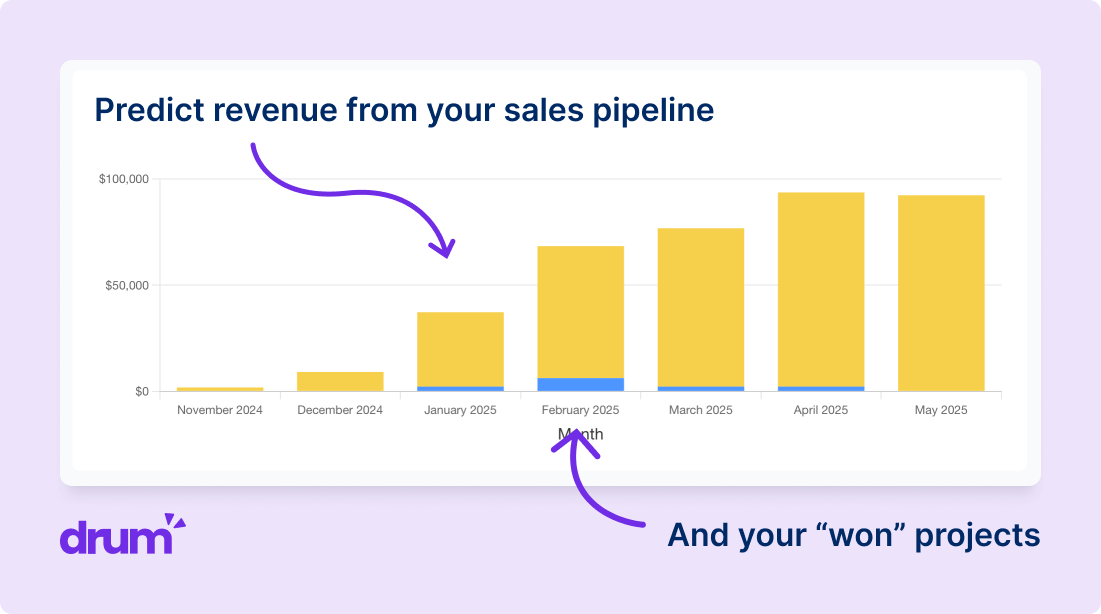
Ask what Harvest cannot see. It cannot see your enquiries, so the work you are chasing is invisible until it becomes a project. It cannot map cash flow across won and potential jobs, so you cannot answer what next quarter looks like without exporting to Excel. It cannot resource your staff, so who is overloaded in six weeks is a conversation rather than a screen. And while it does track billable utilisation, which is the metric that actually runs a design practice, the reporting around it stays thin for the questions directors ask.
So what does that cost you? It is the gap between end-of-month reporting and knowing where you stand. Your WIP is not tracked in any live way. Risks surface weeks after they were created. And the practice manager who holds it together does so with a spreadsheet that only they understand, which is a single point of failure wearing a friendly face.
This is the split worth understanding before you shortlist anything. Standalone trackers like Toggl, Clockify and Everhour typically run $5 to $20 USD per user per month and do one job well. Professional Services Automation (PSA) platforms cover the commercial lifecycle instead, and generally start around $30 to $90+ per user per month. Industry-specific options sit in the second camp: BQE Core, Deltek Ajera and Monograph all target AEC practices, as does Drum for the Australian market.
The cheaper number is only cheaper if the surrounding work is free, and it is not. It is paid for in your practice manager’s evenings.
How Drum Compares to Harvest
Drum is built for Australian built environment practices, which means it starts from the way a studio actually bills: staged fees, claimed progressively, reconciled against the hours that justify them. Here is how the two land on the points that push studios to leave.
| Capability | Harvest | Drum |
|---|---|---|
| Time against tasks | Solid, and quick to set up | Mobile-friendly timesheets with one-click manager approval |
| Staged fees by phase | Flat project with a budget on top | Phases carrying their own share of the fee |
| Multiple rate cards | A known weak point | Rates by role, client and project |
| Progress claims | Not a supported workflow | Claim a percentage against any stage |
| Enquiries and pipeline | Not available | Pipeline tracking with an AI-powered inbox |
| Fee proposals | Not available | One-click proposals, and an accepted fee becomes the project budget |
| Staff resourcing | Sold separately as Forecast | Included |
| Cash flow forecasting | Not available | Projections across won and pipeline work |
| Xero sync | One-way invoice push | Two-way: invoices, contacts, payments, tax rates and tracking categories |
| Profitability reporting | Enterprise tier only | Included, updating as time is logged |
| Pricing model | Per seat, plus usage fees on projects, invoices, clients and tasks | Per seat, with no per-project charge |
| Support | Scheduled phone support | Australian-based, hands-on through migration |
The pricing row is the one that changes the maths. Drum charges $225 AUD per month for five seats and $45 for each additional seat. Your bill moves when you hire, not when you win another small job, which for a studio running sixty residential alterations a year is the difference between a predictable line item and a renewal you have to argue about.
The bigger number sits elsewhere, though. SPI Research has found that firms with real-time project financial visibility recover 5 to 15% of previously unbilled revenue. A six-person studio billing $900,000 a year recovers $45,000 at the bottom of that range. Against that, the gap between two subscription prices stops being the interesting question. The Harvest alternative worth paying for is the one that surfaces revenue you are currently missing.
What actually decides the migration is the fortnight around go-live. The best Harvest alternative on paper still fails if those two weeks go badly. Your project history has to come across, your team has to stop reaching for the old timer, and someone has to sit with your practice manager while the first month-end runs through a new system. Drum’s onboarding covers the data migration and structures the training around your workflows, so if you invoice in stages against a fee proposal, that is what gets configured before go-live rather than a generic feature tour. The support team is in Australia, on your timezone, which counts for most in the week you are trying to get invoices out. Drum’s reviews on the Xero app store are largely about that part of it. If you are weighing up options, it is worth booking a quick demo to see how the stages connect before you commit to anything.
Choosing a Harvest Alternative You Won’t Have to Replace Again
Migrating an operational system is slow, disruptive and something you want to do roughly once a decade. That reality should raise your standards, not lower them. If you are moving anyway, move to something that covers as much ground as it sensibly can.
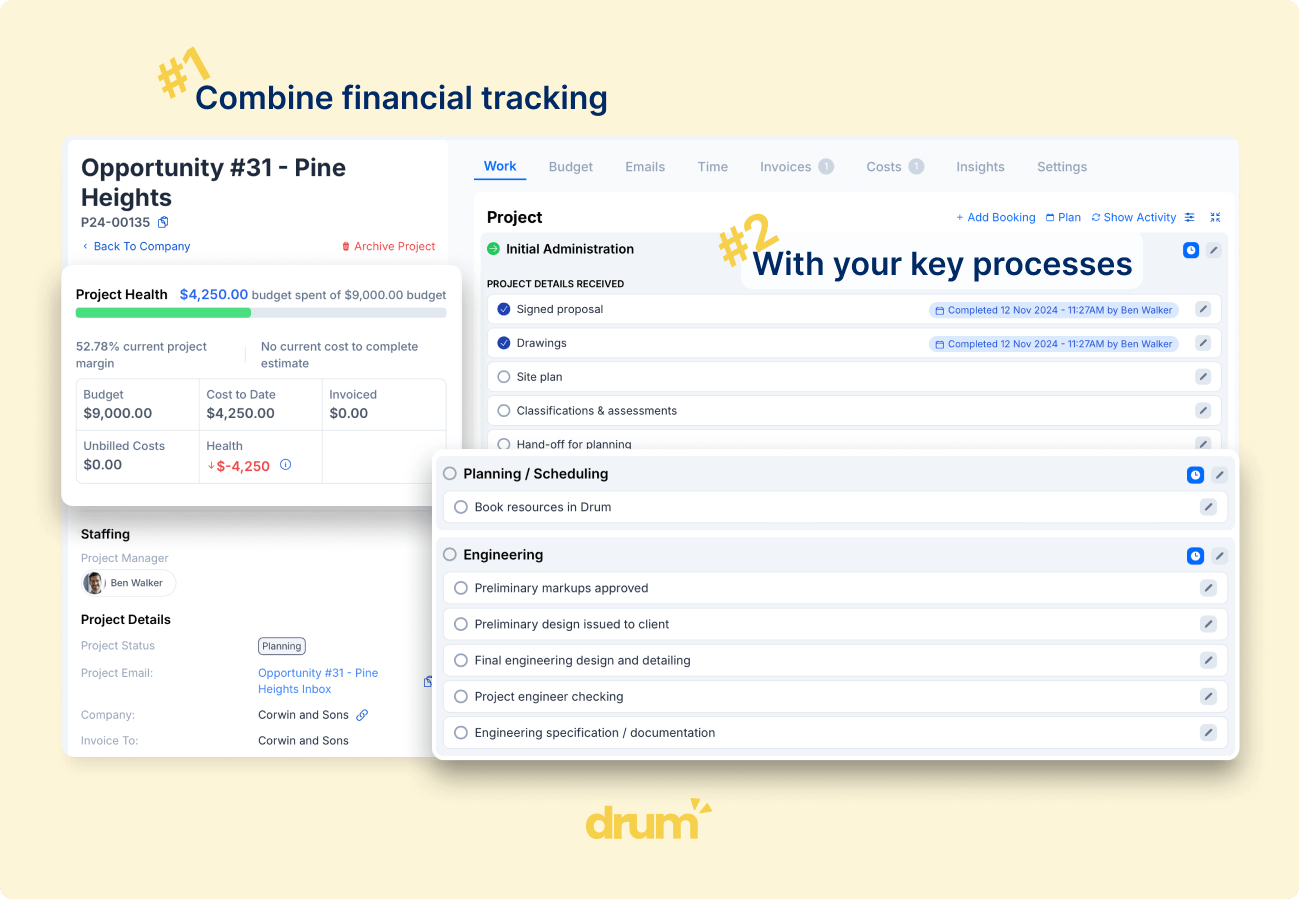
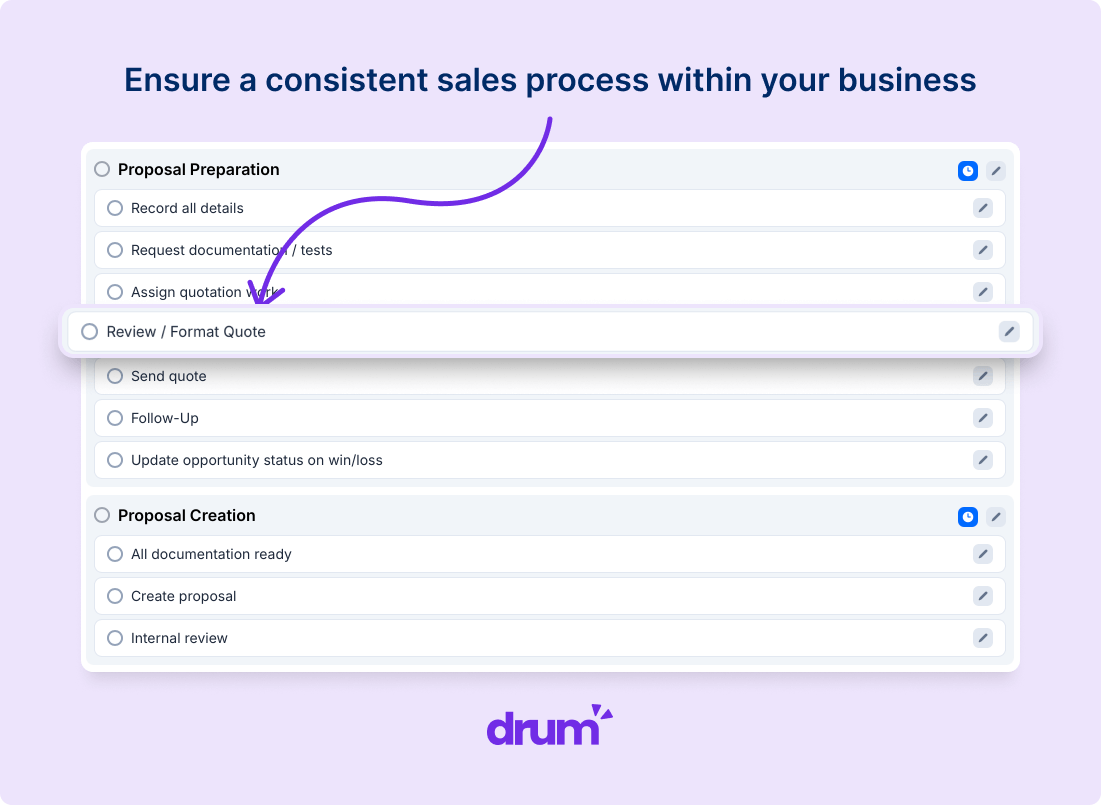
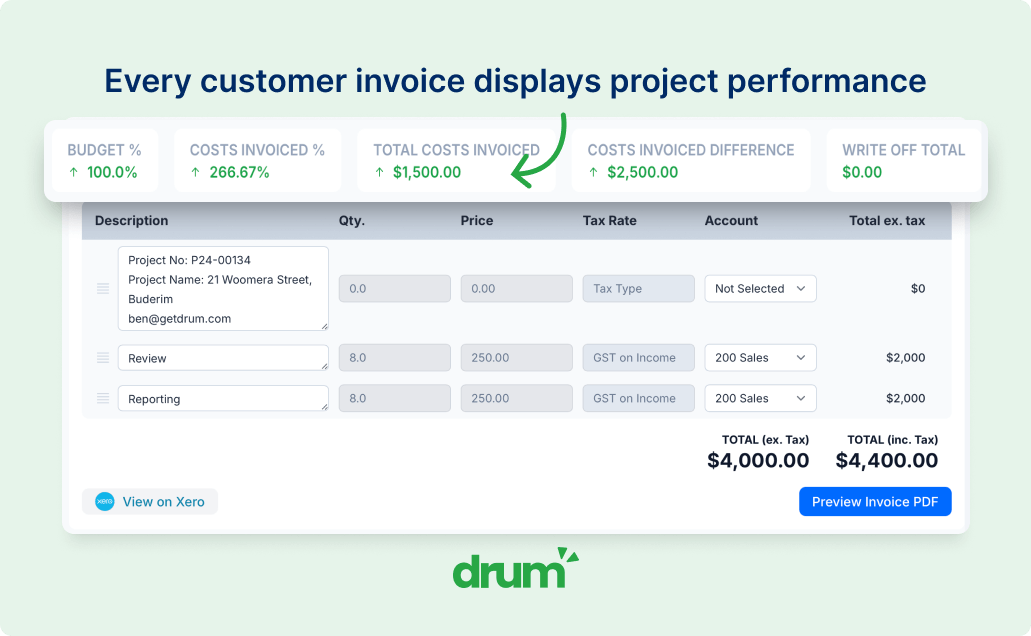
The test is whether one system can carry a job from enquiry through to completion without a handoff. An enquiry arrives and is tracked as pipeline. It becomes a fee proposal with staged amounts. The proposal is accepted and those stages become the project budget, with no re-keying. Your team logs time against phases. You raise a progress claim against a stage, and it syncs to Xero properly, both directions, with contacts and tracking categories intact. Project financials update as the work happens rather than at month end.
That is the difference between a tracker and a single source of truth, and it is the reason a Harvest alternative built for architecture practices and building designers is a different purchase from a cheaper timer.
Be honest about the cost comparison while you are at it. For a six-person studio, Drum is more than Harvest used to charge and less than a project-heavy practice now pays once usage fees land, and it covers the pipeline, proposals, resourcing and reporting rather than the timer alone. Compare the total, not the seat price.
If Harvest’s renewal is what started this, treat it as useful timing rather than bad luck. The right Harvest alternative is not the tracker with the closest feature list and the lowest seat price. It is the system that still fits when your studio is twice the size, billing in stages, and finally able to answer which projects made money while there is still time to do something about it. Our breakdown of time tracking software for architects covers the narrower question, and the WorkflowMax alternative guide is worth a look if you are comparing the wider field.
Frequently Asked Questions
How much does a Harvest alternative actually cost? Budget roughly $5 to $20 USD per user per month for a timer on its own, whether that is Toggl, Clockify or Everhour. Harvest itself is $9 to $17.50 USD per seat depending on tier and billing cycle, plus usage fees on invoices, projects, clients and tasks, which is what has pushed some studios into four-figure annual increases. Integrated PSA platforms generally start around $30 to $90+ per user per month. Drum is $225 AUD per month for five seats and $45 per additional seat, with no per-project charges. For a project-heavy practice, the flat seat model is usually the cheaper of the two once usage fees are counted.
We only need time tracking. Isn’t a full platform overkill? It is a fair objection, and for a two or three person studio doing hourly work, a standalone Harvest time tracking alternative is the right call. The calculation changes once you are running staged fees, coordinating sub-consultants, and rebuilding a spreadsheet every month to work out what is claimable. At that point you are already running a PSA platform, just one assembled from four tools and a person’s memory. The question is whether it is worth paying for the version that holds together.
Should I pick a standalone tracker or an integrated platform? Most lists of alternatives to Harvest time tracking are lists of trackers, which quietly assumes hours are the only thing you are missing. Decide by asking what you cannot currently see. If your only gap is hours, replace like for like and move on. If you cannot see your pipeline, your future cash position, your staff capacity or your live project margins, another tracker will not close those gaps and you will be doing this migration again in three years. Studios over roughly ten people with staged fee agreements almost always end up in the second camp.
Outgrown Harvest? Move once, and move to something that fits.
Drum connects enquiries, fee proposals, time tracking, progress claims and two-way Xero sync in one system built for Australian built environment practices.
Start your free 14-day trial of Drum today.