
 Pipeline & Proposals
 Project Management
 Resource Planning
 Time & Costs
 WIP & Invoicing
 Commercial Reporting
 Consulting Engineers
 Architects
 Town Planners
 Building Designers
See upcoming work before it becomes a delivery problem
Drum connects enquiries, opportunities, fee proposals and project setup so directors can see what work is coming, what revenue is likely, and what capacity the firm will need before projects begin.
- Track enquiries from first contact to proposal acceptance.
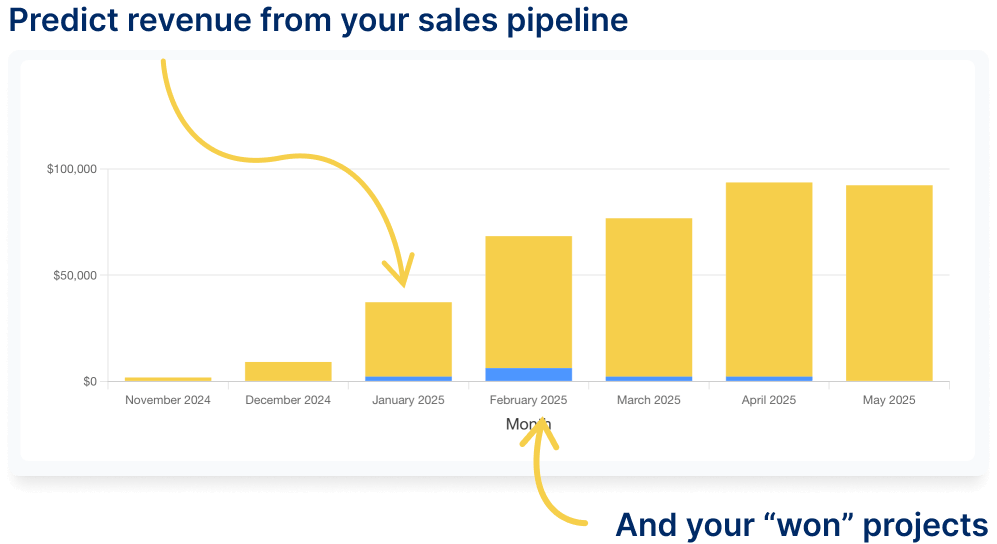
- Forecast revenue from live pipeline data.
- Build fee proposals from structured project budgets.
- Convert accepted proposals into live projects without re-keying.
Most firms do not have a pipeline problem. They have a visibility problem.
Engineering firms often know what they are working on today, but future work is harder to trust.
Opportunities sit in inboxes, spreadsheets, directors' heads or disconnected CRM tools. Fee proposals are created separately from project budgets. Start dates, probabilities and expected revenue are not always visible to the people responsible for resourcing and delivery.
The result is a familiar pattern: leadership only gets a clear view of upcoming work after someone manually pulls the information together.
- Enquiries are tracked across inboxes, spreadsheets and informal follow-up lists.
- Directors rely on memory or manual reports to understand what is likely to land.
- Fee proposals are disconnected from delivery budgets.
- Project managers inherit work without a clear view of what was sold.
- Resourcing pressure appears after projects are already won.
- Every enquiry and opportunity is tracked in one live pipeline.
- Directors can see forecast revenue, probability, expected start dates and follow-up status.
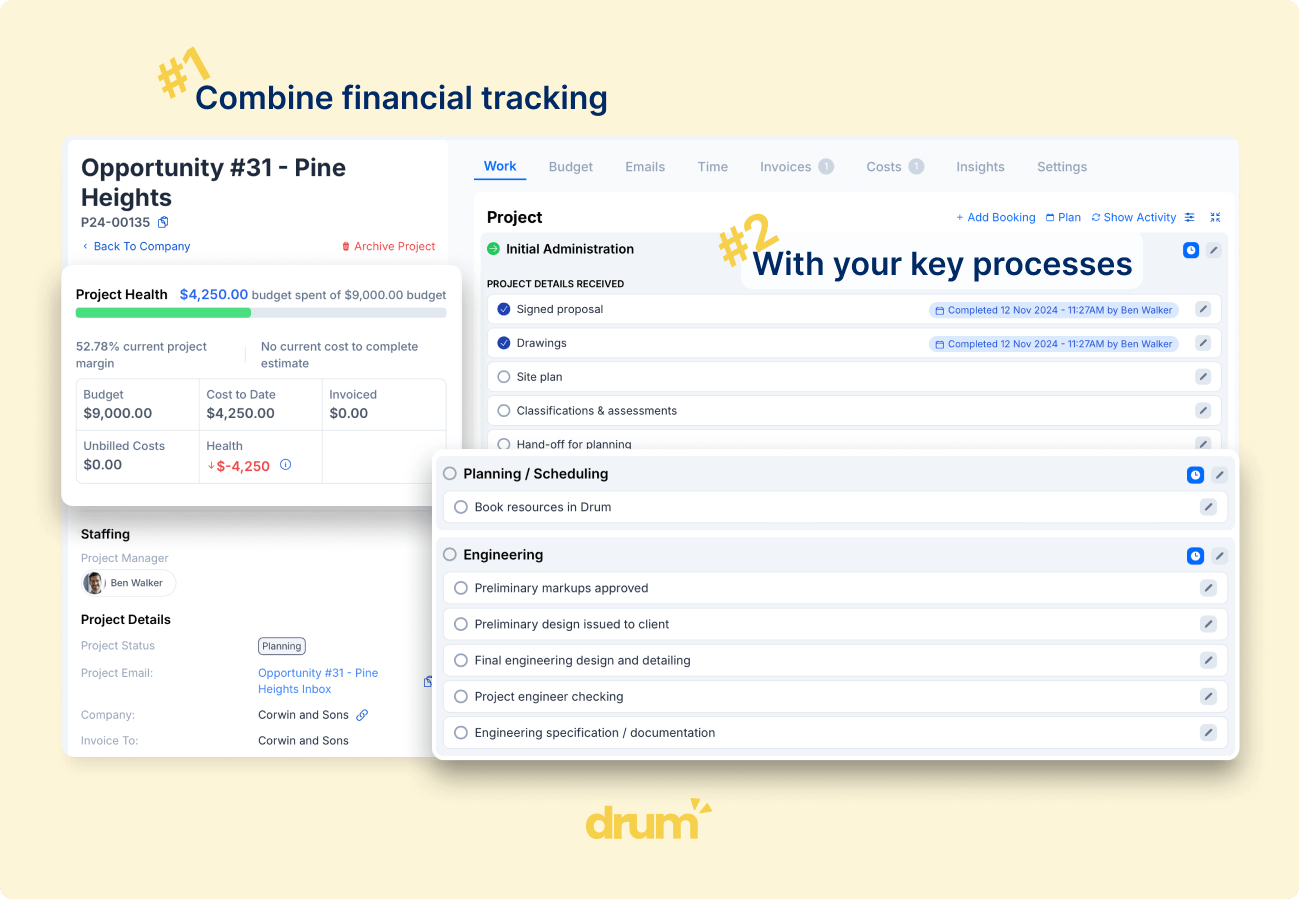
- Proposal pricing is connected to the project budget.
- Accepted proposals become live projects with the right commercial structure in place.
- The firm can plan future workload with more confidence.
Track every opportunity from enquiry to signed proposal
Drum gives your firm a live view of opportunities, proposal value, expected timing and next steps.
Instead of relying on directors or admin staff to keep separate spreadsheets updated, your team can manage the pipeline in the same system that carries work into projects, budgets, invoicing and reporting.
Smart enquiry capture
Forward enquiry emails into Drum and create opportunities from incoming client requests, so potential work does not get lost in inboxes.
Custom pipeline stages
Set up a sales process that matches how your firm actually wins work, from initial enquiry through to proposal, negotiation and acceptance.
Follow-up visibility
See who owns each opportunity, what stage it is in, and what needs to happen next.
Forecast revenue
Track estimated value, probability and expected timing so directors can see likely revenue before work is won.
Build proposals from the same commercial structure your projects need
Drum helps your team create fee proposals using structured deliverables, tasks, stages and budgets.
That means the proposal is not just a document. It becomes the commercial foundation for the project if the work is accepted.
Template-driven proposals
Create consistent fee proposals using your firm's standard structure, branding and terms.
Flexible pricing
Price work by stage, deliverable, discipline, role, task or fixed fee, depending on how your firm sells and manages projects.
Branded Word documents
Generate professional proposal documents from Drum, ready to review, edit and send to the client.
Budget-to-proposal connection
Use project budget data directly in the proposal so pricing, scope and delivery assumptions stay connected.
Turn accepted proposals into live projects without rebuilding the job
When a proposal is accepted, Drum carries the commercial structure into project delivery.
Budgets, stages, deliverables, tasks and team assumptions can flow into the project, giving project managers a clearer view of what was sold and what needs to be delivered.
- Convert accepted proposals into live projects.
- Carry proposal budgets into project budgets.
- Reduce duplicate setup between sales and delivery.
- Give project managers visibility into scope, fee and budget assumptions.
- Create a cleaner handover from directors to delivery teams.
Plan resourcing from likely future work, not just active projects
Pipeline visibility is not just about winning more work. It helps directors understand what the firm may need to deliver next.
With opportunity value, probability and expected start dates in Drum, leadership can see likely future demand before it becomes a capacity issue.
- See weighted pipeline value.
- Forecast likely revenue.
- Understand expected project start dates.
- Identify upcoming workload pressure.
- Make earlier decisions about hiring, scheduling and project commitments.
Connect the start of the job to the rest of the firm
The way a project starts affects everything that follows: resourcing, delivery, WIP, invoicing, project performance and margin.
Drum connects pipeline and proposals into the wider operating system of your firm, so the information captured before a project starts does not disappear once delivery begins.
- Enquiry
- Opportunity
- Proposal
- Project
- WIP
- Invoice
- Report
This gives directors, project managers and finance one connected view from first enquiry through to final invoice.
Built for firms that need clearer visibility from enquiry to delivery
Drum helps built environment firms connect the early commercial decisions made during proposal stage with the project performance visibility needed during delivery.
We have found the team from Drum to be both responsive to our needs and open to changes and improvements. Implementing Drum has allowed us to significantly improve the visibility of our projects' performance to the team and is resulting in more timely and accurate management of our projects.
Daniel Berry
Managing Director, Projex Partners
Pipeline and proposals are only the start
Drum connects the front end of your firm to the delivery, finance and reporting workflows that follow.
Project Management
Carry proposal budgets into live projects and track performance as work happens.
Resource Planning
Use upcoming pipeline and active project demand to understand future capacity needs.
Time & Costs
Capture the actual effort and costs required to deliver the work you proposed.
WIP & Invoicing
Turn project activity into clearer WIP, faster invoicing and fewer finance workarounds.
Commercial Reporting
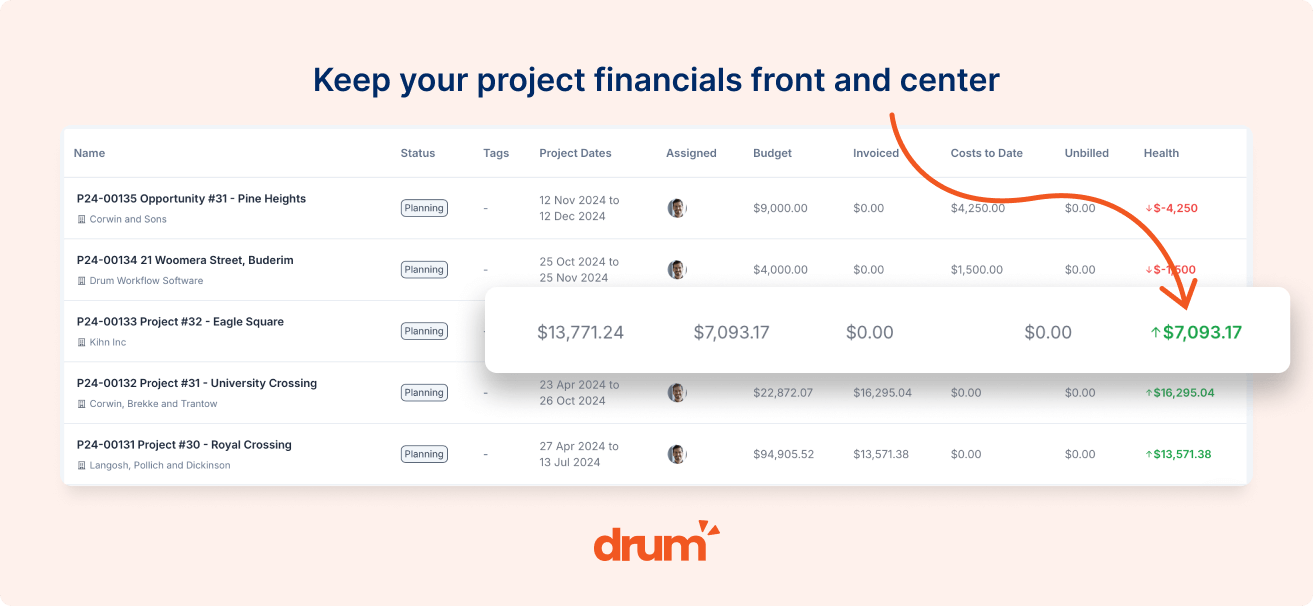
Give directors a live view of pipeline, revenue, utilisation, WIP, margin and project performance.
Xero Integration
Keep finance connected to project activity with genuine two-way sync between Drum and Xero.
Frequently asked questions
Common questions about pipeline visibility, fee proposals, and how Drum connects sales to project delivery.
How does Drum help engineering firms manage their pipeline?
Drum gives your firm one place to track enquiries, opportunities, proposal value, probability, expected timing and follow-up status. This helps directors see what work is coming and what revenue is likely before projects are won.
Can Drum replace our proposal spreadsheets?
Yes. Drum allows you to build fee proposals from structured project budgets, reducing the need to manage proposal pricing separately in spreadsheets.
Can we customise our sales pipeline?
Yes. You can configure pipeline stages to reflect how your firm wins work, whether your process is simple or involves multiple review, pricing and approval steps.
How does Drum connect proposals to project delivery?
When a proposal is accepted, Drum can convert it into a live project. The budget, scope structure, stages and team assumptions can carry through, reducing re-entry and improving handover from sales to delivery.
Can directors see forecast revenue?
Yes. Drum helps directors see pipeline value, weighted revenue, expected timing and opportunity status, giving leadership a clearer view of future revenue.
Does this help with resourcing?
Yes. Because opportunities can include expected value, timing and project assumptions, Drum helps firms understand likely future workload before the work officially starts.
Can we generate branded fee proposal documents?
Yes. Drum can generate proposal documents using your firm's templates, branding and standard terms.
Is this just a CRM?
No. Drum includes CRM and pipeline functionality, but the larger value is that pipeline and proposals connect directly into project budgets, delivery, time, WIP, invoicing and reporting.
Ready to connect your pipeline to the rest of the firm?
Book a walkthrough and see how Drum connects enquiries, fee proposals, project budgets, resourcing, delivery, WIP, invoicing and reporting into one live operating system for your firm.