
 Pipeline & Proposals
 Project Management
 Resource Planning
 Time & Costs
 WIP & Invoicing
 Commercial Reporting
 Consulting Engineers
 Architects
 Town Planners
 Building Designers
How to Prevent Burnout in Your Consulting Firm Before You Lose Your Best People

Ben Walker
Written for Drum
In This Article
How to Prevent Employee Burnout in Your Consulting Firm
To get a handle on burnout, leaders have to stop seeing it as a personal failing and start treating it as a critical business risk. The fix begins with putting systems in place that give you real visibility and control over workloads, tackling the number one cause of burnout head-on and protecting your firm’s profitability in the process.
The True Cost of Burnout in Professional Services
Burnout is a lot more than a buzzword; it’s a direct threat to your firm’s stability and your bottom line.
Think about a star project manager, Sarah, once your most reliable player, who’s now missing deadlines and seems checked out on client calls. This isn’t just someone having a bad week. It’s often a symptom of systemic overload that’s been simmering under the surface for far too long. Research from Eagle Hill Consulting shows that more than 55% of the U.S. workforce is currently experiencing burnout, and younger workers are hit hardest, with Gen Z burnout rates climbing above 66%.
When talented people are consistently stretched too thin, the fallout ripples across the entire business. Project profitability is usually the first casualty. As exhaustion creeps in, mistakes multiply, deadlines slip, and the quality of work starts to dip. This means rework that bleeds your margins dry and puts a strain on client relationships you’ve worked hard to build.

Connecting Symptoms to Financial Impact. The early signs of burnout are easy to miss. A slight drop in engagement here, a cynical comment in a team meeting there, or a new pattern of late-night emails. But these small indicators are the smoke before the fire, early warnings of much bigger financial problems ahead.
The connection between individual stress and business health is direct and measurable. I’ve seen it play out time and again in firms that wait too long to act.
Here’s a breakdown of how those subtle warning signs translate into real financial pain points.
| Warning Sign in Team Members | Potential Impact on the Firm |
|---|---|
| Increased mistakes & rework | Budget overruns and declining project profitability. |
| Lower engagement & cynicism | Reduced client satisfaction and damaged firm reputation. |
| Decreased productivity & missed deadlines | Missed billable targets and inaccurate revenue forecasts. |
| Higher absenteeism & turnover | Recruitment costs up to 200% of an employee’s salary. |
| Lack of energy for new initiatives | Stagnant growth and missed business development opportunities. |
These aren’t just hypotheticals; they are the tangible costs that show up on your P&L statement when your team’s well-being is ignored.
The real danger of burnout is that it quietly erodes your most valuable assets: your people and your reputation. By the time the impact is obvious on a financial report, the underlying cultural damage is already deep.
The Unseen Driver of Burnout. In consulting and professional services, one factor stands out above all others. Unmanageable workloads are the top culprit behind employee burnout, impacting a staggering 80.3% of workers in high-pressure industries. It’s the leading cause, right alongside unfair treatment and poor communication from management, with global daily stress hitting record highs.
This isn’t about just offering a wellness app or a yoga class. Preventing burnout is a core business strategy. The first real step toward building a healthier, more sustainable firm is to implement systems that give you clear visibility and control over who is working on what, and when.
When you connect the dots between employee well-being and financial performance, you can see just how critical effective project management and accounting systems are for both your team and your profitability.
Spotting Burnout Risk with Smart Workload Management
The best way to solve the burnout problem is to catch it before it ever really starts. This means shifting away from relying on gut feelings and moving toward data-driven insights to proactively flag risks. Think of it as a regular health check for your firm’s operational well-being.
Moving beyond guesswork lets you see the real story behind your team’s effort. For a marketing agency, for instance, that means getting a unified view of every single person’s true capacity: not just their assigned project work, but also internal meetings, admin tasks, and planned time off. This complete picture is the foundation of smart workload management.
Moving From Reactive to Proactive. Without clear data, managers often only notice burnout when performance has already started to dip. Proactive workload management completely flips the script by giving you early warning signs. You can start spotting the red flags long before an employee feels the need to raise their hand and admit they’re drowning.
This empowers you to intervene with support and solutions, not just react to problems. It changes the entire dynamic from constant crisis management to thoughtful, strategic planning.
The goal is to become a strategic resource planner who balances workloads fairly, ensuring projects succeed without overtaxing your most valuable asset: your people. By spotting the signs early, you can make small adjustments that prevent big problems down the road.
Key Red Flags to Monitor. When you have the right system in place, you can track specific metrics that signal a potential overload. These data points give you objective evidence, helping you start supportive conversations based on facts, not just assumptions.
Keep an eye out for these patterns:
- Consistently High Utilization Rates: An employee clocking in over 90% utilization for several weeks straight is a massive red flag. A short burst can be normal during a crunch, but a sustained high rate is a recipe for exhaustion.
- Frequent Weekend Work: If you see timesheets with work regularly logged on Saturdays or Sundays, it means the standard workweek isn’t cutting it. This is one of the clearest signs of an unsustainable pace.
- A Pattern of Pushed-Back PTO: When team members repeatedly cancel or postpone their vacation, it often means they feel too overwhelmed to step away. It can also signal that your project planning isn’t properly accounting for necessary downtime.
Let’s take a practical example. Imagine a project manager at an engineering firm, David, who consistently hits 95% utilization. From a purely financial perspective, this might look fantastic. But a closer look shows he hasn’t taken a full week off in eight months and frequently logs hours on weekends just to catch up on admin. This isn’t high performance; it’s a burnout-in-progress that a simple utilization report helps you see and fix.
Mastering this kind of oversight is essential. For a closer look at structuring your team for success, our guide to effective resource planning and management offers practical frameworks you can apply today. Having this visibility allows you to rebalance assignments, approve that much-needed vacation, or find ways to reduce their admin burden before they hit a breaking point.
Building a Fair Workload and Capacity Plan
Once you can spot the warning signs of burnout, you can start building a system that actively prevents them from ever taking hold. This is where a fair and transparent workload and capacity plan becomes your best friend, shifting you from constantly reacting to problems to proactively creating balance.
This isn’t about guesswork or just hoping everyone can handle “one more thing.” It’s about building a single source of truth for your team’s real availability. That way, you can distribute work based on hard data, not just gut feelings.
From Guesswork to Data-Driven Decisions. Let’s run through a quick, real-world scenario. Imagine you’re a leader at an architecture firm, and you’re about to kick off a complex, multi-phase project. The old way? You’d probably assign tasks based on who seemed least busy or who had the most experience, then cross your fingers and hope for the best.
With a proper system in place, the approach is completely different. By looking at real-time capacity data, you see each architect’s current project load, their internal commitments, and any approved time off. Now you can estimate hours for the new project and assign resources with total confidence, knowing exactly who has the bandwidth without being pushed into the red.
This simple process eliminates the hidden stress that comes from unexpected overload. When assignments are based on actual capacity, it builds a foundation of psychological safety. Your team starts to trust that you genuinely have their back and won’t just pile on work without understanding their current commitments.
A well-structured capacity plan does more than just allocate resources; it sends a clear message to your team that their well-being is a non-negotiable part of the project’s success. It’s a powerful tool for building trust.
This short infographic highlights a few of the key burnout indicators you can monitor with a good system.
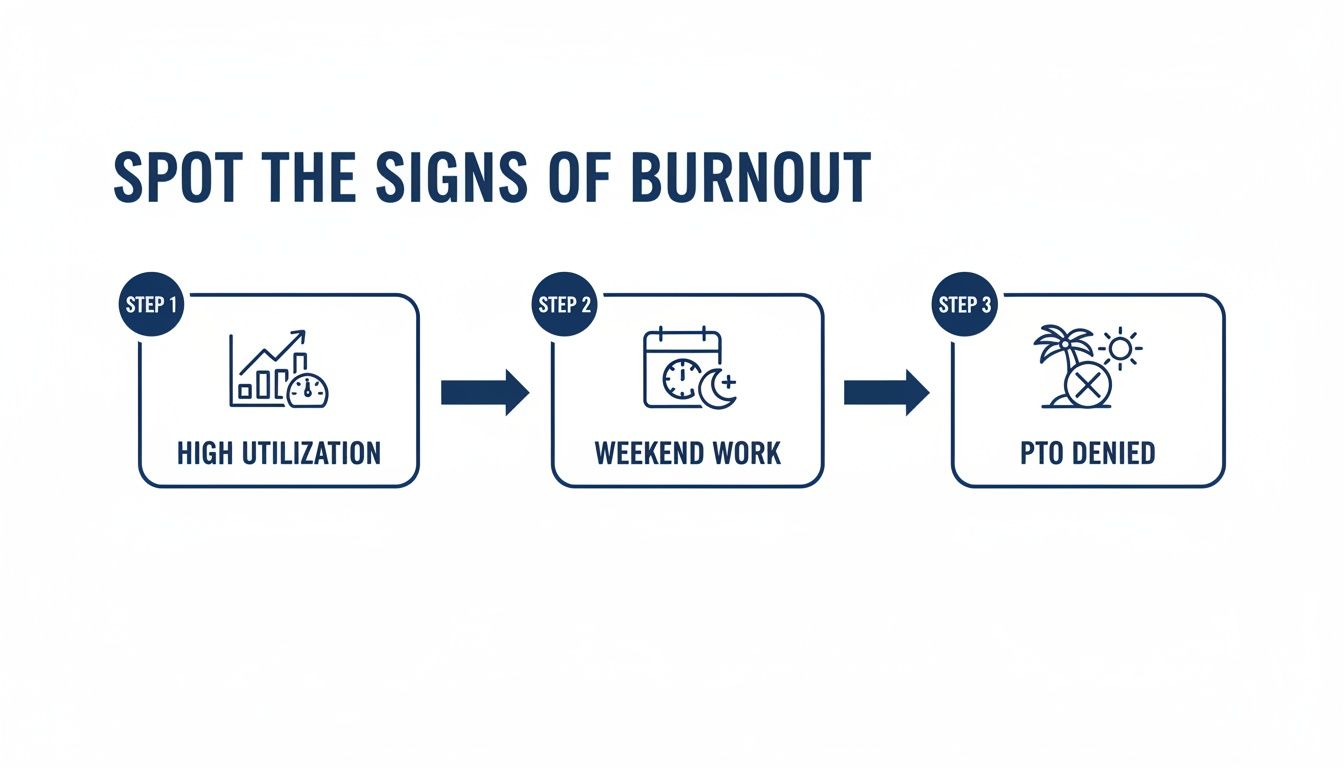
Tracking metrics like consistently high utilization, frequent weekend work, and denied PTO requests gives you objective data to start supportive conversations early, before small issues become big problems.
The True Cost of Unmanaged Stress. Failing to manage workloads transparently feeds directly into the number one trigger for burnout: mental and emotional stress. A recent survey is pretty stark, showing that a staggering 63% of employees cite this as their main issue.
This stress gets amplified when critical business data is buried in messy spreadsheets. It’s no wonder that 77% of workers report work-related stress, with a worrying 23% feeling pushed to the brink of quitting. You can learn more about how employee burnout is surging due to mounting stress on grantthornton.com.
Integrating Time Off Without Friction. One of the most critical parts of any realistic capacity plan is how it handles time off. A great system doesn’t just track vacation days; it integrates them directly into your project timelines and resource availability.
Here’s how that works in practice:
- Request and Approval: An employee submits a PTO request for a week in July through a central system.
- Automatic Capacity Update: Once you approve it, the system automatically marks them as unavailable for that entire period, dropping their capacity to zero.
- Timeline Adjustments: Instantly, project timelines and resource plans reflect this change. This shows managers exactly how the absence impacts deadlines and highlights who might need a bit of extra support.
This gives managers complete visibility without creating any extra admin work. They can spot potential bottlenecks weeks or even months in advance and adjust plans accordingly. It prevents the last-minute scrambles and, most importantly, ensures your team members can truly disconnect when they take their well-earned time off.
How Automation Reduces Administrative Overload
Burnout doesn’t always ignite from the heat of high-stakes, client-facing projects. Far more often, it’s a slow burn, fueled by a thousand tiny administrative cuts.
Think about the endless chase for timesheets, the mind-numbing data entry for proposals, and the tedious back-and-forth of reconciling expenses. This is the constant, low-value work that silently drains energy and chips away at job satisfaction until there’s nothing left.
Automation isn’t about replacing people; it’s about giving your skilled professionals back their most valuable resource: time. By tackling the daily friction of administrative tasks, you can dramatically lower stress and free your team to focus on the strategic, creative work they were actually hired to do.
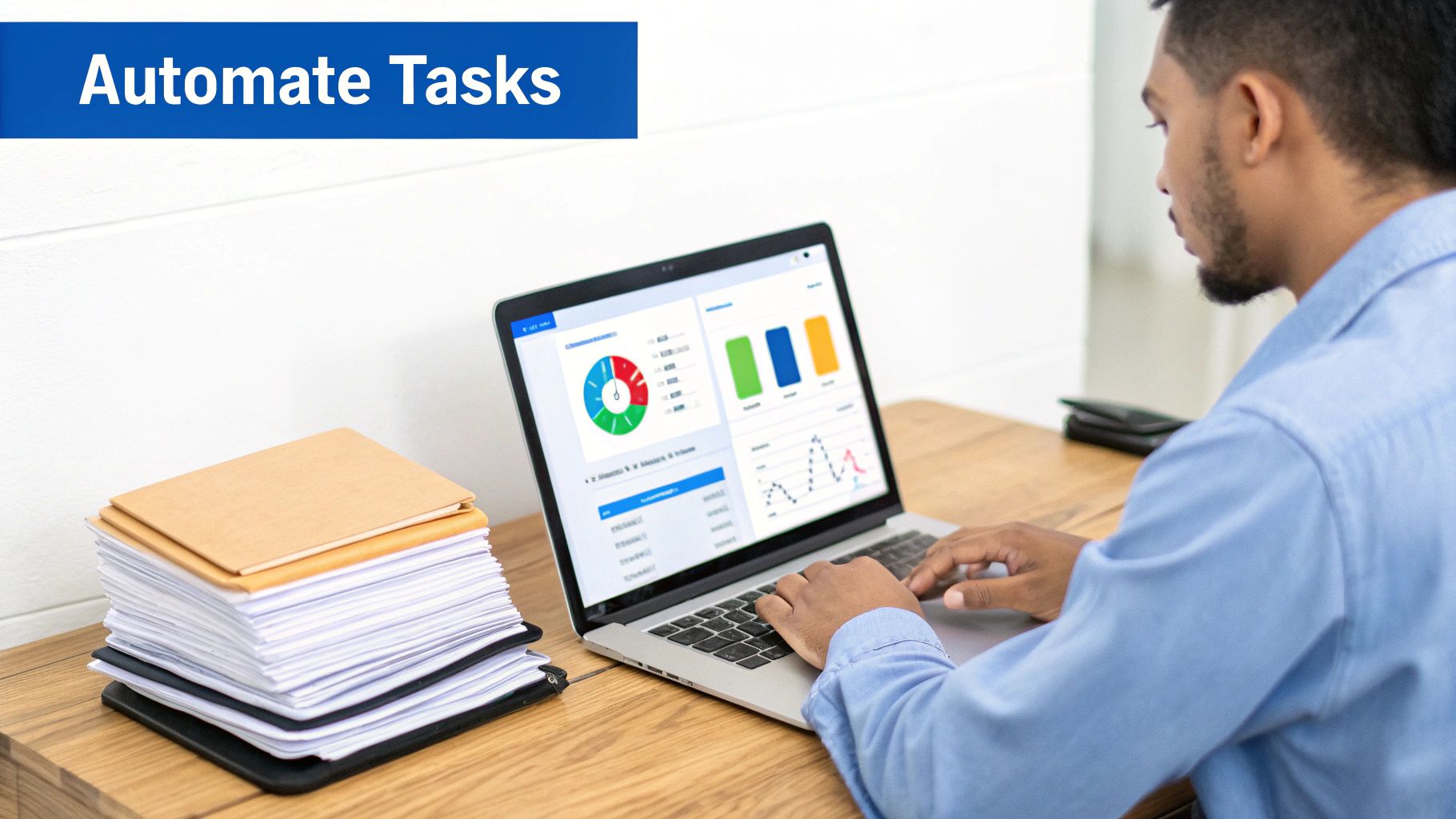
From Manual Drudgery to Automated Flow. Picture a senior consultant at a marketing agency. She’s a brilliant strategist but finds herself spending four to five hours every single week manually building proposals. This involves copying and pasting data from the CRM, tweaking boilerplate text, and formatting everything just right.
This isn’t just inefficient; it’s demoralizing. It’s exactly the kind of repetitive, unfulfilling work that leads your best employees to quietly ask themselves, “Is this really my job?”
Now, let’s look at the “after” scenario with an integrated system in place.
- Before: Hours are torched manually creating proposals. This leads to inconsistencies, errors, and valuable time that could have been spent on billable client work just evaporating.
- After: A new proposal is generated in minutes. The system automatically pulls client data from the CRM, populates standard service templates, and creates a polished, professional document that’s ready for her final review.
This simple shift doesn’t just save time. It obliterates a major source of frustration. The consultant can now spend those recovered hours developing groundbreaking client strategies, mentoring junior staff, or pursuing new business. These are the activities that drive real value and reignite her engagement.
The goal of automation is to eliminate the mundane tasks that get in the way of meaningful work. When you remove administrative friction, you create space for innovation, collaboration, and genuine job satisfaction.
Practical Automation Wins for Your Firm. Getting started with automation doesn’t require a massive, complex overhaul. Small, targeted changes can have an immediate and powerful impact on your team’s daily workload and morale.
Just think about these common pain points and their automated solutions:
- Invoicing: Stop the manual scramble of compiling timesheets and expenses. An automated system can generate invoices directly from approved time entries and expense reports, which not only reduces errors but also seriously speeds up your cash flow.
- Time Tracking: No manager enjoys being the “timesheet police.” With automated reminders and dead-simple mobile submission options, compliance improves dramatically. This frees up managers from nagging and lets them focus on leading.
- Expense Management: Let your team snap photos of receipts with their phones. A good system can automatically categorize the expense and link it to the correct project. No more saving crumpled receipts or battling tedious spreadsheets.
These processes are often handled by a unified system. You can explore our guide to understand what professional services automation is and how it centralizes these functions to create a much smoother workflow for everyone.
By automating these essential but repetitive tasks, you’re not just improving efficiency. You’re actively investing in your team’s well-being and building a more resilient firm. The financial stakes are real: a study published in the American Journal of Preventive Medicine found that a single burned-out employee costs an employer an average of roughly $4,000 per year through decreased engagement and reduced effectiveness, and globally, burnout costs businesses an estimated $322 billion in lost productivity annually.
Creating a Culture That Actively Prevents Burnout
You can have the most powerful tools and dialed-in processes in the world, but they’ll fall flat if your company culture doesn’t support your people. Preventing burnout is so much more than just workload management; it’s a deliberate shift in how your team communicates, collaborates, and values well-being. And that shift starts at the top.
As a leader, your actions set the tone for the entire firm. When you build an environment of psychological safety, where people feel comfortable speaking up without fear of being penalized, you lay the groundwork for a truly burnout-resistant culture. This isn’t about having a token “open-door policy.” It’s about proactively starting the conversations that show you genuinely care about your team as people, not just resources.

Go Beyond Status Updates in Check-Ins. Weekly check-ins are a golden opportunity to move past the usual project updates and really tune into your team’s well-being. Instead of just asking, “What are you working on?” try mixing in questions that get to the heart of their workload and stress levels.
This small change can transform a routine meeting into one of your most powerful tools for preventing burnout.
Here are a few simple but incredibly effective questions to weave into your next check-in:
- “What’s one thing we could change right now to make your week less stressful?”
- “Looking at your current projects, where do you feel the most pressure?”
- “Do you feel like you have enough focus time, or are you being pulled in too many directions?”
- “Is there anything getting in the way of you being able to fully disconnect after hours?”
These questions aren’t just for show. They open the door for honest feedback and allow you to tackle small issues before they snowball into full-blown burnout. More importantly, they prove that you value your team’s perspective and are ready to make real adjustments.
When your team sees that their well-being is a genuine priority, their trust in leadership grows. This trust is the glue that holds a healthy, sustainable culture together, making every other process more effective.
Leaders Must Model Healthy Behaviors. Your team is always watching. If you preach the importance of work-life balance but then consistently fire off emails at 10 PM, your actions will always speak louder than your words.
Honestly, one of the most impactful things you can do to prevent burnout is to model the healthy behaviors you want to see.
That means taking real, uninterrupted vacations. When you go on holiday, truly disconnect. Don’t check your email or hop on “just one quick call.” Let your team see that rest isn’t just allowed; it’s encouraged and respected at the highest level.
Think about it: when a project manager takes a full week off and their out-of-office message makes it clear they won’t be responding, it sends a powerful signal. It tells their direct reports that it’s not only okay for them to do the same, but it’s expected. It reinforces that time off is for recharging, not for working from a different location.
This “walk the talk” approach is where the magic happens. When your team sees you using capacity data to justify pushing back a deadline or reallocating resources, it builds immense trust. It proves that the systems and tools you’ve put in place aren’t just for tracking; they’re for actively protecting the team.
This alignment between what you say and what you do is what truly forges a culture that prevents burnout.
Building this kind of supportive environment is an active process. Here’s a quick checklist of actionable steps leaders can take to start embedding these principles into the company’s DNA.
Actionable Steps for a Burnout-Resistant Culture
| Leadership Action | Desired Outcome | Example Implementation |
|---|---|---|
| Schedule “No-Meeting” Blocks | Increased focus time and reduced context switching. | Block out Wednesday afternoons across the company calendar for deep work. |
| Publicly Celebrate Rest | Normalizes taking time off and reduces guilt. | Give a shout-out in a team meeting to someone returning from a vacation, e.g., “Welcome back, Sarah! Hope you had a fantastic, disconnected break.” |
| Review and Enforce Time-Off Policies | Ensures policies are fair and actually used. | Set a team goal to have 90% of staff use at least 80% of their annual leave. Flag individuals with large unused balances and encourage them to book time off. |
| Implement “Right to Disconnect” Guidelines | Protects personal time and sets clear boundaries. | Establish a core hours policy (e.g., 10 am - 4 pm) and an explicit guideline that there is no expectation to respond to emails or messages after 6 pm. |
| Lead with Vulnerability | Creates psychological safety for others to share struggles. | Openly share a (professional) challenge you’re facing, e.g., “This project deadline is tight, and I’m feeling the pressure. Let’s make sure we’re all supporting each other.” |
Each of these steps, no matter how small, contributes to a larger cultural shift. They signal that the well-being of the team is not just a talking point, but a core business priority that is actively managed and measured.
Even with the best strategies, specific questions always pop up when you’re trying to build a more resilient and supportive firm. Here are some quick, practical answers to the things we hear most often from leaders.
How Can We Tell High-Performers from Those Nearing Burnout?
This is a big one. The key difference really boils down to sustainability. A true high-performer is productive and engaged, but their work patterns are manageable and consistent over the long haul.
Someone heading for burnout, on the other hand, often shows these frantic, unsustainable bursts of activity. You might see them logging crazy hours, getting irritable or cynical, and even making uncharacteristic mistakes on tasks they’d normally nail.
If you see a sustained utilization rate creeping over 90% or consistent weekend work, that’s a major red flag. It’s time for a supportive chat about their workload, not just another pat on the back for their dedication.
Our Firm Is Small. Do We Really Need a Platform to Manage Workloads?
Yes, absolutely. In fact, it might be even more important for a small firm. Team members are usually wearing multiple hats, which makes it incredibly easy for workloads to get lopsided without anyone realizing it.
That “we all pitch in” culture, while great in spirit, can accidentally hide the fact that one or two people are shouldering a massive amount of the work.
Spreadsheets and shared docs just can’t give you a real-time, dynamic view of who’s actually at capacity. Bringing in a simple platform early on builds good habits. It means that as you grow, you have a scalable system for resourcing already in place, helping you sidestep the operational chaos that fuels burnout in expanding firms.
What Is the Most Important Metric to Track for Burnout Prevention?
While several metrics give you good clues, the Billable Utilization Rate, tracked over time, is probably the most powerful leading indicator you have. This KPI shows you exactly how much of an employee’s available time is spent on revenue-generating work versus their total capacity.
A consistently high rate—say, staying above 90% for several weeks straight—is a strong signal of potential overload.
When you pair this data with how their hours are tracking against project budgets, you get a complete picture of who is carrying the heaviest load. This lets you step in proactively to rebalance assignments and stop burnout before it ever takes hold.
Ready to stop reacting to burnout and start preventing it?
Drum gives you the real-time visibility and control you need to balance workloads, manage capacity, and build a sustainable, profitable firm. See how you can protect your team and your bottom line.
Start your free 14-day trial and discover a better way to run your studio.