
 Pipeline & Proposals
 Project Management
 Resource Planning
 Time & Costs
 WIP & Invoicing
 Commercial Reporting
 Consulting Engineers
 Architects
 Town Planners
 Building Designers
WorkflowMax Alternatives in Australia: 7 Options Compared (2026)

Ben Walker
Written for Drum

In This Article
- Why Australian firms are leaving WorkflowMax
- What to look for in a WorkflowMax alternative
- The alternatives, honestly compared
- 1. Drum: Best overall for Australian architects, engineers and planners
- 2. Abtrac: Best for firms that value a long track record
- 3. Projectworks: NZ-built, utilisation and margin focused
- 4. Scoro: Full-featured PSA for larger teams
- 5. Teamwork.com: Strong project delivery, lighter on financials
- 6. Productive.io: Clean interface, agency-focused
- 7. WorkflowMax by BlueRock: The incumbent, two years on
- Pricing at a glance
- Which Australian WorkflowMax alternative fits your firm
- Frequently Asked Questions
The short answer. The best WorkflowMax alternative in Australia for architects, consulting engineers, town planners and surveyors is Drum. It is the only option on this list that combines all five of these: Australian-built, fee proposals through to invoices in one system, a two-way Xero sync, flat AUD pricing, and a dedicated WorkflowMax importer. Here is the full ranking:
| # | Platform | Best for | Starting price | Xero sync | Built in |
|---|---|---|---|---|---|
| 1 | Drum | Australian architects, engineers, planners and surveyors | $225 AUD/mo for 5 seats, all features | Deep, two-way | Australia |
| 2 | Abtrac | Firms that value a 25-year track record | $47/month (1 user) | Good | Australia |
| 3 | Projectworks | Utilisation and margin reporting, no pipeline needed | From $39 AUD/user | Good | New Zealand |
| 4 | Scoro | Larger teams (30+) happy with USD pricing | $26 USD/user, 5-user minimum | Moderate | Estonia |
| 5 | Teamwork.com | Task management and client collaboration | $10.99 USD/user | Basic | Ireland |
| 6 | Productive.io | Digital and creative agencies | $9 USD/user | Basic | Croatia |
| 7 | WorkflowMax by BlueRock | Simple workflows, continuity over capability | Contact sales | Deep, two-way | Australia (BlueRock) |
Searching for Australian WorkflowMax alternatives is a sign you’ve already spotted the cracks. Maybe your team maintains a spreadsheet for WIP alongside WorkflowMax because the reporting doesn’t give you the view you actually need. Maybe your project managers have stripped the project structure back to the bare minimum, purely so timesheets can be allocated and invoices generated without the whole thing becoming a management exercise on top of the actual work. These workarounds accumulate quietly until someone asks why you’re paying for software the business has long since outgrown.
This article ranks seven real options for Australian architecture practices, consulting engineering businesses, town planning consultancies, and similar firms where project financial control matters as much as delivery. It includes an honest assessment of WorkflowMax by BlueRock itself, for firms wondering whether staying put is good enough. It does not cover generic project management tools with a time tracker bolted on, and it is not written for tradies.
Full disclosure: Drum is one of the seven, and we built it. We’ll be direct about where it fits and where it doesn’t, and we’ll give every other option a fair assessment.
Why Australian firms are leaving WorkflowMax
The frustrations we hear most consistently from firms that have migrated from WorkflowMax fall into five clear patterns.
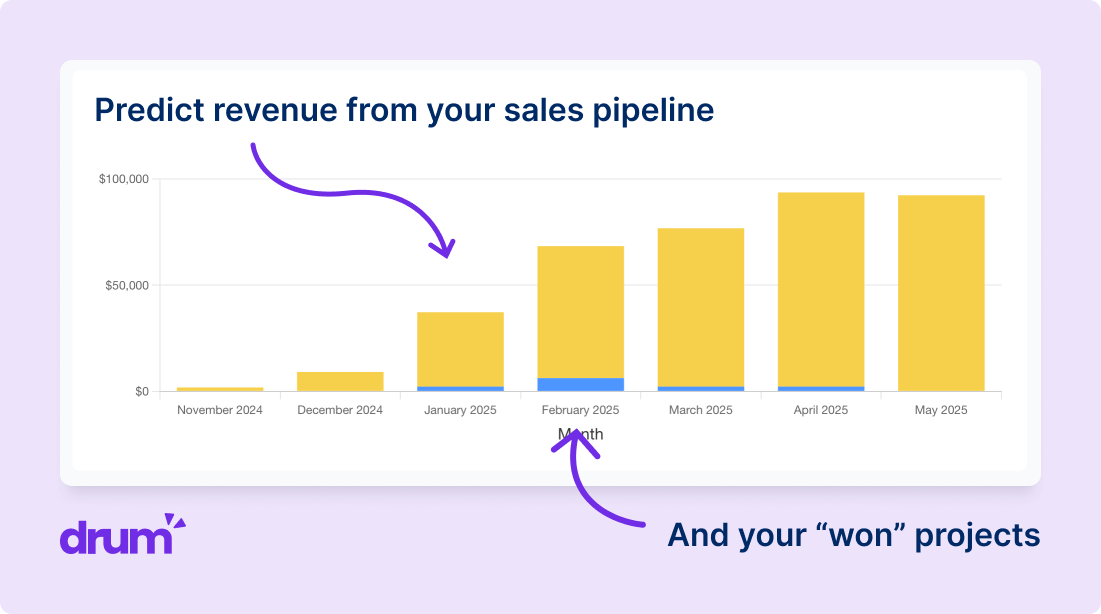
No cashflow or revenue forecasting. WorkflowMax tells you what’s been invoiced. It doesn’t tell you what’s coming. For a 15-person consulting firm managing five active projects and three fee proposals in negotiation, that’s a meaningful gap. Understanding future cashflow means pulling data into a spreadsheet and updating it manually every time a project milestone shifts.
A quoting system that doesn’t flow into projects. WorkflowMax’s quoting structure is fixed in a way that doesn’t match how most professional service firms scope work. Converting an accepted fee proposal into an active project isn’t automatic. It’s a workaround managed internally, and when staff turn over or the process slips, that hand-off breaks down.
Spreadsheets doing the real work. If your team is maintaining a separate spreadsheet for WIP, revenue forecasting, or billable utilisation tracking, that’s the clearest signal that WorkflowMax isn’t meeting your needs. The platform should be the source of truth. If it’s one input among several, you’re carrying the overhead of two systems while getting the benefits of neither.
Minimised use over time. This one is subtle but common. Firms gradually reduce their WorkflowMax setup to the simplest possible project structure, purely so time can be allocated and invoices generated. The platform becomes a time-allocation tool rather than an operational backbone. At that point, you’re paying for capability you’ve given up trying to use.
No single dashboards for understanding WIP. Consulting style businesses need to understand their project WIP across the business in real time, and WorkflowMax makes this challenging.
Step back from the individual complaints and a single cause sits underneath all of them. WorkflowMax is built to be broad. It sells to trades businesses, IT providers, marketing agencies, and professional consultancies in the same breath, so every feature has to work passably across all of them and deeply for none. For a built environment consultant, that compromise lands exactly where it hurts: fee proposals that don’t map cleanly onto project phases, no real grip on sub-consultant costs, and reporting that was never shaped around utilisation and WIP. A platform serving everyone can give you the basics of any industry. Fitting the specific shape of yours is a different problem, and it’s the one WorkflowMax was never designed to solve.
Here’s how that plays out in practice. A 15-person engineering consultancy we worked with last year tracked time in a separate spreadsheet because the interface was too slow to bother with during the day. Every month-end, their office manager lost two full days reconciling those timesheets, raising invoices, and cross-checking each one against Xero. Project managers had no view of budget burn until that reconciliation was finished, so overruns surfaced weeks after the damage was done. The firm wasn’t missing a single feature. It was carrying a process the software should have absorbed.
So what should you actually be looking for?
What to look for in a WorkflowMax alternative
Firms that navigate this transition well aren’t just looking for something that does what WorkflowMax did. They want a platform that works the way their business actually works.
Xero or MYOB integration that’s genuinely deep. Not just an invoice push. Two-way sync covering invoices, contacts, payments, tax rates, tracking categories, and account codes. In Australia, your accounting system is the source of financial truth. Your project platform needs to connect to it properly, not just talk to it. We’ve unpacked what a genuinely deep sync looks like in our guide to Xero project management software.
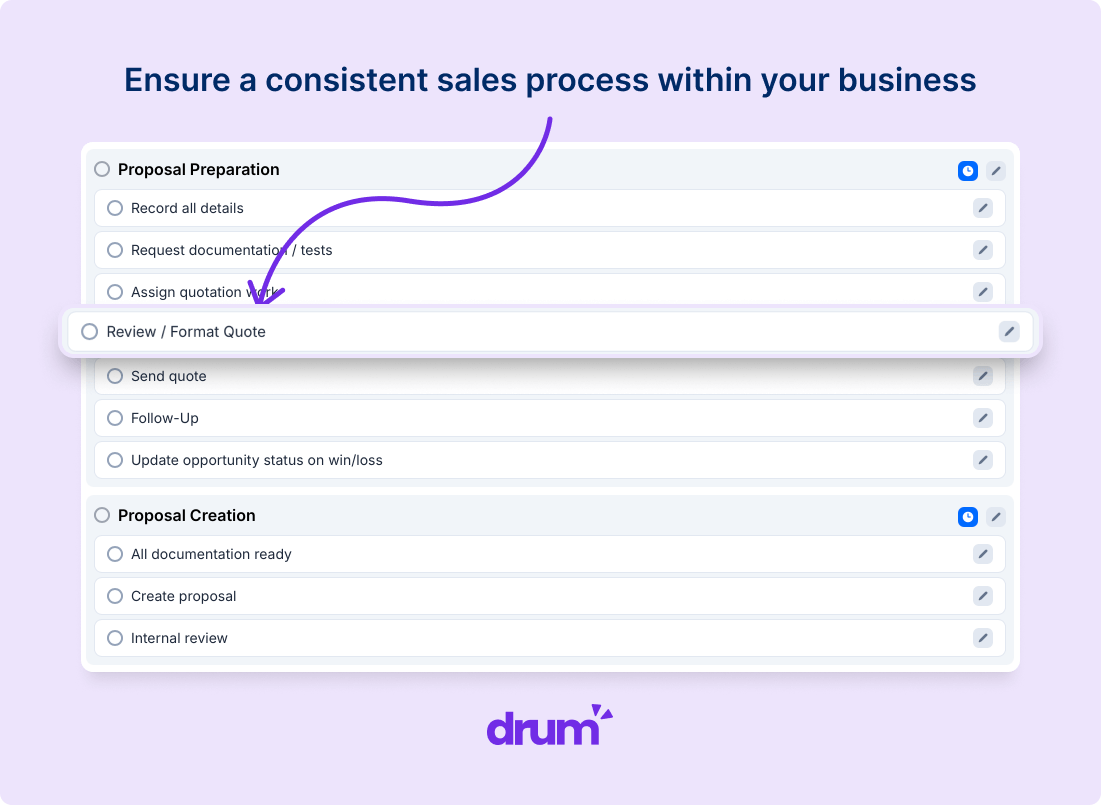
A pipeline and fee proposal workflow that converts naturally into projects. An enquiry comes in, becomes a fee proposal, gets accepted, and should become an active project with the same structure intact. That flow should happen inside one system. Not across three tools with a manual hand-off between each.
Project structure that matches your internal requirements. This means phases, tasks, estimated resourcing, and budget visibility from day one. Not a template you have to bend to fit your firm’s way of working. A horizontal tool hands you a flexible shell and leaves the fitting to you; a platform built for built environment work already knows what a fee phase, a progress claim, and a sub-consultant cost are before you start.
Timesheets your team will actually use. A timesheet system that asks too much will fail. The best ones are fast, self-explanatory, and connect time directly to project budgets without extra steps.
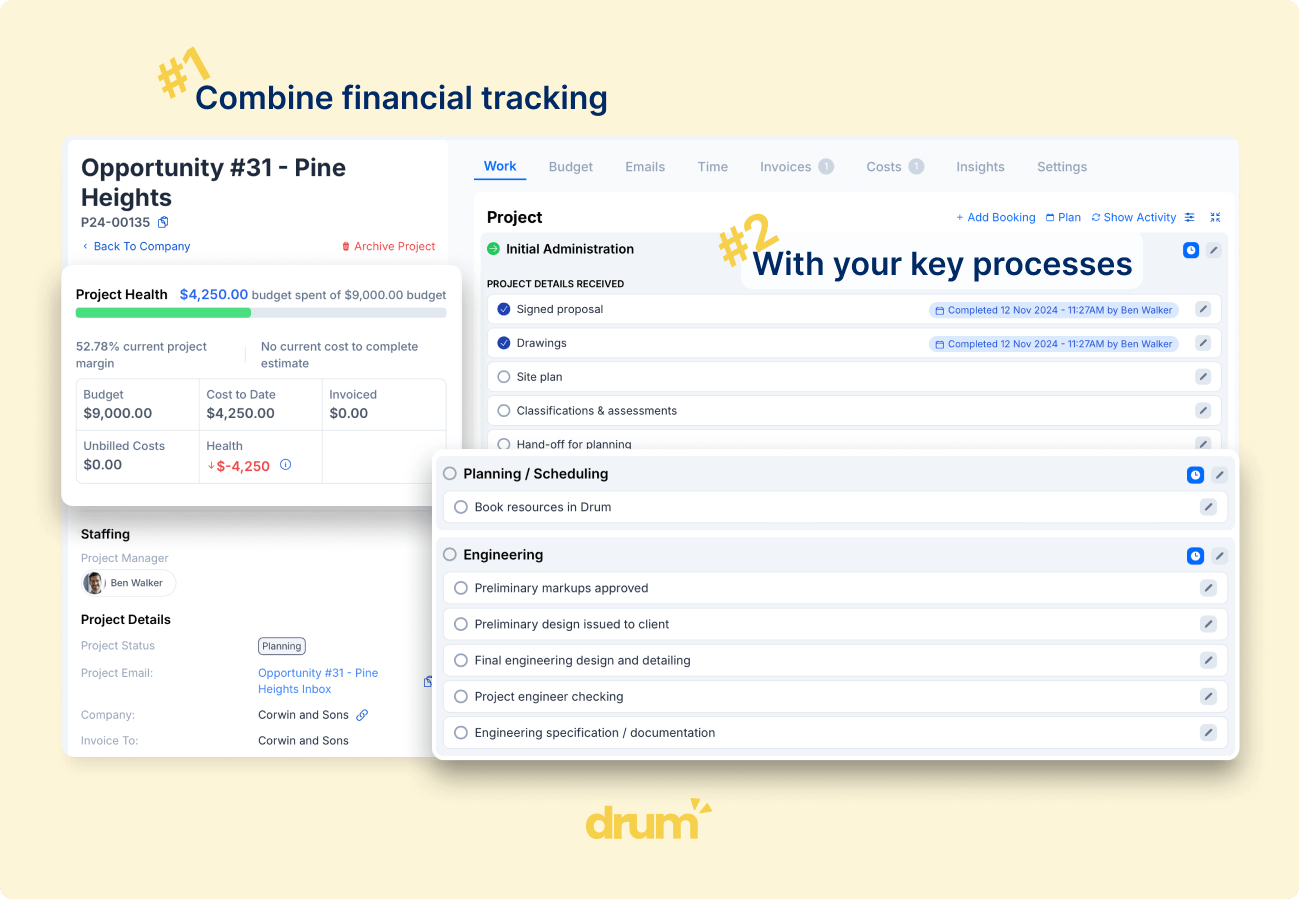
Reporting built for consulting firms. Specifically: staff billable utilisation, project profitability, WIP, pipeline resourcing requirements, and forward cashflow. These aren’t edge cases. They’re the metrics a director of a 20+ person consultancy needs every week.
One practical detail worth checking: look for platforms with a WorkflowMax data importer. A structured migration tool reduces the risk of losing historical job, time, and invoice data. Rebuilding that history from CSV exports is time-consuming and error-prone.
Choosing a replacement also has a longer tail than most firms expect. Training staff, updating billing workflows, and embedding a new platform into your operations takes real change management effort. It’s worth spending more time evaluating the right fit upfront than switching again in two years.
The alternatives, honestly compared
Here is how the seven options stack up for Australian professional service firms, in ranked order, including WorkflowMax by BlueRock itself.
1. Drum: Best overall for Australian architects, engineers and planners
Drum is our top pick, and the reason is fit. It is Australian-built practice management software for architects, consulting engineers, town planners, building designers and surveyors, typically firms of 10 or more people. More than 250 Australian built environment firms run on it. It covers the full workflow from sales pipeline and fee proposals through project management, time tracking, invoicing, and financial performance reporting. Every feature is included on every plan for a flat $225 AUD per month, which covers your first 5 seats, plus $45 per month for each additional seat. No modules, no tiers.
The Xero integration is two-way: invoices, contacts, payments, GST rates, tracking categories, and account codes all sync automatically. Drum holds a 5.0 rating on the Xero App Store. The platform is hosted in Sydney, and support runs from the Sunshine Coast, Queensland. Average live chat response is under 10 minutes during business hours.
For firms leaving WorkflowMax, Drum has a dedicated WorkflowMax importer, so you don’t rebuild your job history from CSV exports. Most firms are live within 14 days.
The philosophy behind Drum came from ten years of building custom software for Australian built environment firms. The pattern that delivered the most value every time was a genuine single source of truth: an enquiry becomes a fee proposal, the fee proposal structure maps directly to the project, and from the project you track time and generate invoices without re-entering data. That flow shouldn’t require workarounds or manual reconciliation steps.
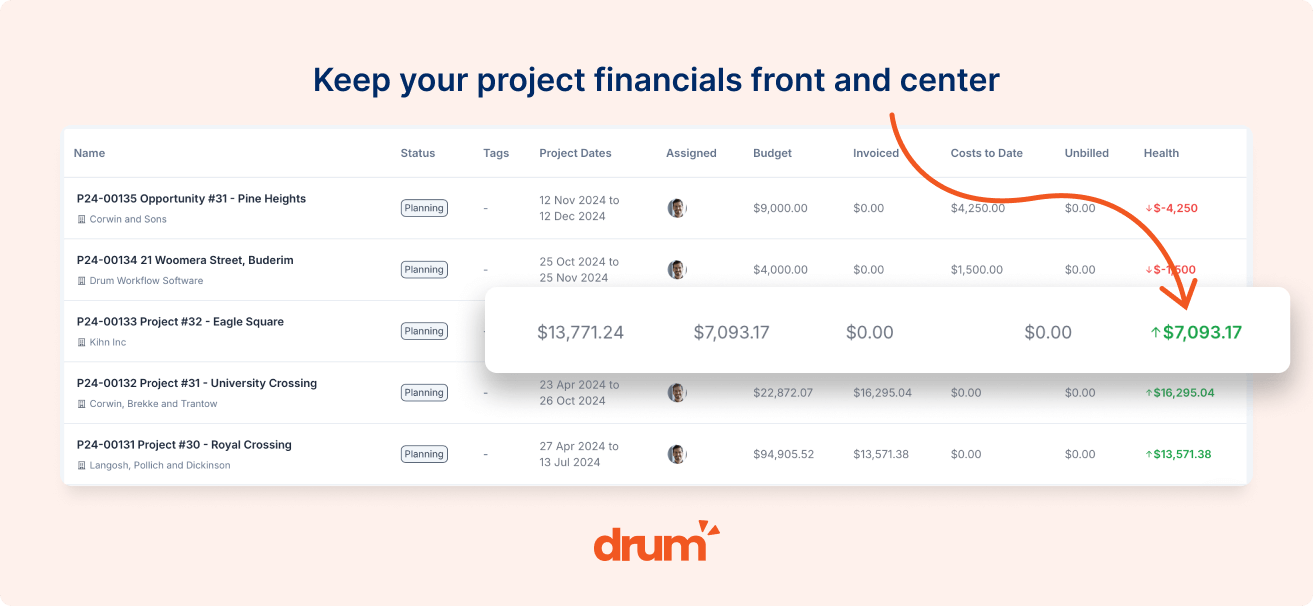
This is the deliberate trade-off behind Drum. Where WorkflowMax stretches to cover every industry it can reach, Drum goes the other way: it’s built around how built environment and professional service firms actually run projects, and it doesn’t try to be anything else. That focus is why the numbers built environment firms live on, staged fee billing, utilisation, and WIP across the business, are designed in from the start rather than bolted on afterwards.
If you’d like to see how that workflow applies to your specific setup, booking a demo is the fastest way to assess fit before starting a trial.
Where Drum is strongest: built environment firms between 10 and 80 people that want one platform replacing WorkflowMax without stitching together a stack of connected tools. Where it has limitations: very large enterprises with complex ERP or multi-entity requirements may eventually need something more.
For architecture practices specifically, there’s a more detailed breakdown in our guide to WorkflowMax alternatives for architects.
2. Abtrac: Best for firms that value a long track record
Abtrac has been on the market for over 25 years, selling to professional service firms across Australia and New Zealand. It covers time tracking, job management, invoicing, and close to 100 ready-made reports, with a Xero integration built by an accredited developer. Migration support is hands-on, and the team operates within Australian time zones.
Abtrac’s main strength is that history. It has no separate pipeline or CRM: a proposal in Abtrac is a project set up as a proposal, so enquiries and fee proposals don’t get a workflow of their own. The other gap is day-to-day use. Some Capterra reviews call it dated, slow, or hard to learn, and firms that have moved from Abtrac to Drum tell us the same story: staff put off time entries, variations go unrecorded, and WIP reporting ends up back in a spreadsheet. If spreadsheets alongside WorkflowMax are the reason you’re reading this, test that point hard in a trial. Worth evaluating if your team already knows it and you value a long track record over a faster interface. For a direct comparison, see our Abtrac alternative breakdown.
3. Projectworks: NZ-built, utilisation and margin focused
Projectworks targets architecture, engineering, and consulting firms across Australasia. It covers time tracking, leave management, invoicing, revenue forecasting, and capacity planning with a strong focus on utilisation and margin analysis. The timezone alignment with Australian business hours is a real advantage over Northern Hemisphere vendors. The trade-off: invoice templating has drawn criticism for rigidity, and the platform lacks the proposal and pipeline management that Drum or Scoro include.
Worth evaluating if utilisation and margin reporting is your main gap and you want a regional vendor. For a direct comparison, see our ProjectWorks alternative breakdown.
4. Scoro: Full-featured PSA for larger teams
Scoro is a European-built Professional Services Automation (PSA) platform covering project management, CRM, quoting, time tracking, billing, and financial reporting. The dashboards and resource planning tools are genuinely strong. Pricing starts at $26 USD per user per month for the Essential plan, with most firms needing the Standard or Pro tiers at $37 to $63 USD. Minimum of 5 users.
Support operates from European time zones, so afternoon questions from Melbourne or Brisbane may not get answered until the following morning. For larger firms (30+ people) with complex project portfolios and appetite for USD pricing, Scoro is a serious contender.
5. Teamwork.com: Strong project delivery, lighter on financials
Teamwork.com serves over 16,000 businesses globally. Task management, Gantt charts, workload balancing, and client collaboration are all well-executed. Time tracking and basic budgeting are included, but the financial reporting depth and Xero integration don’t match what purpose-built PSA platforms offer. Most professional service firms will need the Grow or Scale plans at $19.99 to $54.99 USD per user per month.
Best for firms whose main frustration with WorkflowMax was project coordination and delivery rather than financial management.
6. Productive.io: Clean interface, agency-focused
Productive.io has gained traction with agencies and creative services firms. The interface is well-designed and the budgeting tools are detailed. You can track profitability at project, client, and service-line level. Pricing starts at $9 USD per user per month, with most useful features at the $24 USD Professional tier.
The gap for Australian firms is Xero integration depth and European support hours. Best for digitally native agencies that prioritise interface design and are comfortable handling Xero reconciliation with a lighter sync.
7. WorkflowMax by BlueRock: The incumbent, two years on
If you’re already on WorkflowMax, staying put is still a choice, so it’s worth being clear about what that choice now means. This is the only WorkflowMax there is: Xero retired the original in June 2024 and handed the brand to BlueRock, who migrated over 15,000 accounts onto a rebuilt platform. Two years on, the early teething problems have settled into a steady pattern rather than disappearing. Reviews on G2 and Trustpilot still flag slower workflows, invoicing discrepancies, the absence of multi-currency billing, and support tickets that sit for weeks. Firms also report they can’t export their historical data cleanly, which makes leaving feel harder than it should.
Back in 2024 the open question was trajectory. Two years of track record now answers it: feature development has stayed slow while the platform prioritises stability across a large migrated user base. The deeper issue is one of design rather than delivery. WorkflowMax has always been a broad job management tool. Trades businesses, agencies and consultancies all use it, so its features are shaped to suit the average of those industries. That breadth is why built environment firms end up with spreadsheets for fee stages, progress claims and WIP: the consulting-specific workflows were never its focus.
WorkflowMax may still suit firms with simple workflows who value continuity over capability. If that’s you, be specific about the features your team relies on and confirm each one works as you need before you commit to another year.
Pricing at a glance
| Platform | Best For | Xero Integration | Pipeline & CRM | AUS/NZ Support | Migration Tool |
|---|---|---|---|---|---|
| Drum | Australian architects, engineers, planners and surveyors | Deep, two-way | Yes | Yes (QLD) | Dedicated WorkflowMax importer |
| Abtrac | Firms that value a long track record | Good | No (proposals are tracked as projects) | Yes | Dedicated support |
| Projectworks | Utilisation and margin reporting | Good | No | Yes (NZ) | - |
| Scoro | Larger teams (30+) | Moderate | Yes | No (European) | Self-managed |
| Teamwork | Task management and client collaboration | Basic | No | No (European) | Self-managed |
| Productive | Digital and creative agencies | Basic | No | No (European) | Self-managed |
| WorkflowMax by BlueRock | Simple workflows, continuity | Deep, two-way | No | Yes | Automatic |
| Platform | Entry Price | Price for Full Features | Minimum Users | Currency |
|---|---|---|---|---|
| Drum | $225 flat (5 seats) | $225 flat + $45 per extra seat (all features included) | 5 seats included | AUD |
| Abtrac | $47/month (1 user) | Tiered per user, plus $20/month for the Xero link and setup fees on request | None | AUD |
| Projectworks | $39/user | $55/user | None | AUD |
| Scoro | $26 | $37-$63 | 5 | USD |
| Teamwork | $10.99 | $54.99 | None | USD |
| Productive | $9 | $24+ | None | USD |
| WorkflowMax by BlueRock | Contact sales | Contact sales | Contact sales | AUD |
The headline figure only tells part of the story. The real cost question is what happens when your team stops using the platform because it’s too slow, too confusing, or too disconnected from your accounting system. SPI Research has found that firms with real-time project financial visibility recover 5-15% of previously unbilled revenue. At a 20-person firm billing $4M per year, 5% is $200,000. A platform your team actually uses pays for itself quickly.
Which Australian WorkflowMax alternative fits your firm
Approaching this as a five to ten year decision rather than a short-term migration changes how you evaluate it. The change management overhead of switching platforms again in two years, retraining staff and rebuilding billing workflows, is significant enough that getting it right the first time matters more than getting it done fast.
If you run an Australian architecture, engineering, planning or surveying firm and want a single Australian-built platform replacing everything WorkflowMax did, with deep Xero integration and a proposal-to-invoice workflow that doesn’t rely on supplementary spreadsheets, Drum is our top pick and the most direct replacement. It’s purpose-built for built environment and professional service firms rather than a broad tool spread thin across every industry, which is the difference you feel once your projects stop fitting the generic mould.
If your team already knows Abtrac, or you value a 25-year track record over a faster interface, it’s worth a look. Run a real job through it first and see whether the spreadsheets stay closed.
If utilisation and margin reporting is your whole brief and you don’t need pipeline or fee proposals in the same system, Projectworks is a regional vendor worth evaluating.
If you’re a larger firm (30+) with complex resource planning and can absorb USD pricing and European support hours, Scoro is the most fully featured option.
If your main frustration with WorkflowMax was project coordination rather than financial control, Teamwork offers strong delivery tools at a competitive price.
If you’re a digital agency that prioritises interface design and can manage a lighter Xero integration, Productive fits that profile.
If you’re already on WorkflowMax by BlueRock and wondering whether to bother moving, it may be enough if your workflows are simple and data continuity outweighs the feature gaps. Check current G2 reviews before committing to another year.
If you’re coming from Total Synergy rather than WorkflowMax, the trade-offs are different: the pain there is usually add-on pricing and configuration overhead rather than missing features. Our Total Synergy alternative guide covers that switch.
The best test for any of these platforms is a trial with real projects and real data. Most offer free trials. If you want to understand whether Drum fits your workflows before starting one, book a demo and we’ll walk through your specific setup without a generic slide deck.
To understand what PSA software actually covers before evaluating any platform, our guide to Professional Services Automation (PSA) is a useful starting point.
Frequently Asked Questions
What is the best Australian WorkflowMax alternative, and what does it cost?
For Australian architects, consulting engineers, town planners and surveyors, Drum is the best WorkflowMax alternative. It is Australian-built, syncs two ways with Xero, runs fee proposals through to invoices in one system, and has a dedicated WorkflowMax importer. Drum is a flat $225 AUD per month for your first 5 seats, then $45 per additional seat per month, with every feature included. Abtrac starts at $47 a month for one user with cheaper per-user rates as you grow (full Abtrac pricing breakdown), and Projectworks charges $39 to $55 AUD per user per month across its Build, Scale and Unleash tiers. Scoro runs $37-$63 USD per user per month depending on the tier, with a 5-user minimum. Teamwork ranges from $10.99 USD (entry) to $54.99 USD (full features). Productive starts at $9 USD but most firms need the $24 USD Professional plan. For Australian professional service firms evaluating international platforms, factor in AUD/USD exchange rate risk alongside the per-seat price.
Can I migrate my WorkflowMax data to a new system?
Yes, though migration quality varies by platform. Look specifically for a WorkflowMax data importer that handles historical job records, time entries, and invoices. Drum has a dedicated WorkflowMax importer, and most firms are live within 14 days. Abtrac offers migration support through its onboarding team. For platforms without a dedicated importer, migration typically involves exporting CSVs and remapping data manually, which increases both cost and the risk of errors in your historical records.
Is WorkflowMax still available in Australia?
The original WorkflowMax platform was retired by Xero in June 2024, displacing over 15,000 accounts. BlueRock acquired the brand and rebuilt the platform, and it is available as WorkflowMax by BlueRock. However, user reviews on G2 describe slower workflows, missing features, and support tickets going unanswered for weeks. Two years on, many firms on the platform continue to evaluate Australian WorkflowMax alternatives.
Ready to see what a genuine WorkflowMax replacement looks like for your firm?
Drum is built for Australian professional service firms that need one system for proposals, projects, time tracking, and Xero-connected invoicing.
Start your free 14-day trial of Drum today.