
 Pipeline & Proposals
 Project Management
 Resource Planning
 Time & Costs
 WIP & Invoicing
 Commercial Reporting
 Consulting Engineers
 Architects
 Town Planners
 Building Designers
8 Work Plan Examples for Consulting and Agency Projects

Ben Walker
Written for Drum

In This Article
8 Work Plan Examples for Project Teams
Ever feel like your projects are a mix of organized chaos and heroic last-minute saves? You’re not alone. While talent and hard work are crucial, the real secret to consistently successful, profitable projects is a solid work plan. Think of it less as a to-do list and more as the strategic blueprint that transforms ambitious goals into tangible results, keeps scope creep in check, and protects your bottom line. Without a clear plan, even the most brilliant teams can drift off-course, missing deadlines and eroding margins.
This guide moves beyond generic templates. We’ve put together 8 industry-tested examples of a work plan, each tailored for the unique demands of consulting, engineering, marketing, and creative firms. Each one is a detailed breakdown, showing you not just what to include but why it matters and how to implement it effectively. These are actionable frameworks designed to bring clarity, control, and strategic foresight to your most complex projects.
Instead of just managing tasks, you’ll learn to master project outcomes. We will explore everything from multi-phase project delivery to resource capacity planning and client-centric workflows. Get ready to see how a well-structured example of a work plan can become your most valuable asset, with practical takeaways you can adapt today.
Project Delivery and Workflow Plans
The first two work plan models focus on the mechanics of getting work done and getting paid for it. One structures the project itself; the other connects the entire client lifecycle from first conversation to final invoice.
1. Project-Based Work Plan with Time & Resource Allocation. A project-based work plan is a foundational tool for professional services firms, breaking down complex projects into manageable phases, tasks, and deliverables. This detailed example of a work plan shines by integrating time and resource allocation directly into the project structure, ensuring every hour and every team member is accounted for. This method is particularly effective for businesses that bill by the hour or by project deliverable, as it connects effort directly to profitability.
This approach starts by defining distinct project phases, such as “Discovery,” “Design,” and “Implementation.” Within each phase, specific tasks are assigned to team members who track their hours against unique project or task codes. This granularity provides a real-time view of progress against the budget. For instance, a marketing agency could track the 10 hours a Junior Designer spends on “Initial Ad Creatives” and the 2 hours a Senior Strategist spends on “Client Kickoff Meeting.” This ensures accurate billing and provides data to improve future project estimates. The primary benefit is clarity: it links who is doing what, for how long, and at what cost.
Strategic Insight: By tying billable hours directly to project milestones, firms can instantly assess the profitability of each project phase. This allows for proactive adjustments rather than discovering budget overruns after the fact.
Establish project codes before work begins to ensure consistent and accurate time tracking from day one. Schedule regular check-ins to compare planned hours against actuals, helping you spot at-risk projects early and reallocate resources as needed. Use tracked time and expenses to automatically generate client invoices, which can seriously speed up your cash flow. For firms looking to simplify this, you can learn more about how consulting project management software can help automate these workflows.
2. Proposal-to-Invoice Workflow Plan. An end-to-end workflow plan documents the entire client engagement lifecycle, from the initial sales opportunity to the final invoice. This comprehensive example of a work plan creates a repeatable, automated process for converting leads into revenue. It’s perfect for professional services firms aiming to eliminate manual handoffs, reduce administrative headaches, and ensure smooth transitions between sales, project management, and finance.

This plan connects your CRM, proposal software, and project management tools into a single, cohesive system. When a new opportunity is qualified, a proposal is generated from a template. Once the client approves it, the proposal’s scope, deliverables, and budget automatically convert into a new project with pre-populated tasks and milestones. For example, a consulting firm can ensure that the “10 stakeholder interviews” and “market analysis report” outlined in their proposal become trackable tasks in their project plan. This direct link prevents scope creep and ensures billing accuracy. The primary benefit is continuity: it maintains data integrity and context from the first conversation to the final payment, reducing errors and saving time.
Strategic Insight: By treating the entire client lifecycle as one integrated workflow, you can identify bottlenecks that slow down your revenue cycle. For instance, you can see if proposals are consistently stalled at a certain stage and implement automated follow-ups to keep things moving.
Standardize with proposal templates that have pre-defined services, rates, and terms to speed up creation and ensure pricing consistency across your team. Use a system that automatically converts an accepted proposal into a project, carrying over all scope and budget details to eliminate manual data entry and potential errors. Set up triggers to automatically generate invoices when project milestones are completed or on a recurring schedule. To make accounting even smoother, you can explore guides on invoicing in QuickBooks Online for integration.
Resource and Capacity Plans
Talent is your firm’s most expensive and most important asset. These two work plan models address how to deploy people wisely across projects and how to structure large engagements so that complexity doesn’t overwhelm your team.
3. Resource Capacity & Workload Balancing Plan. A resource capacity and workload balancing plan is a strategic tool designed to optimize team utilization and prevent burnout. This example of a work plan is essential for professional services firms, as it proactively matches future project demands with available team capacity. It goes beyond simple task assignment by considering both billable and non-billable time, ensuring a sustainable and profitable balance for your team.
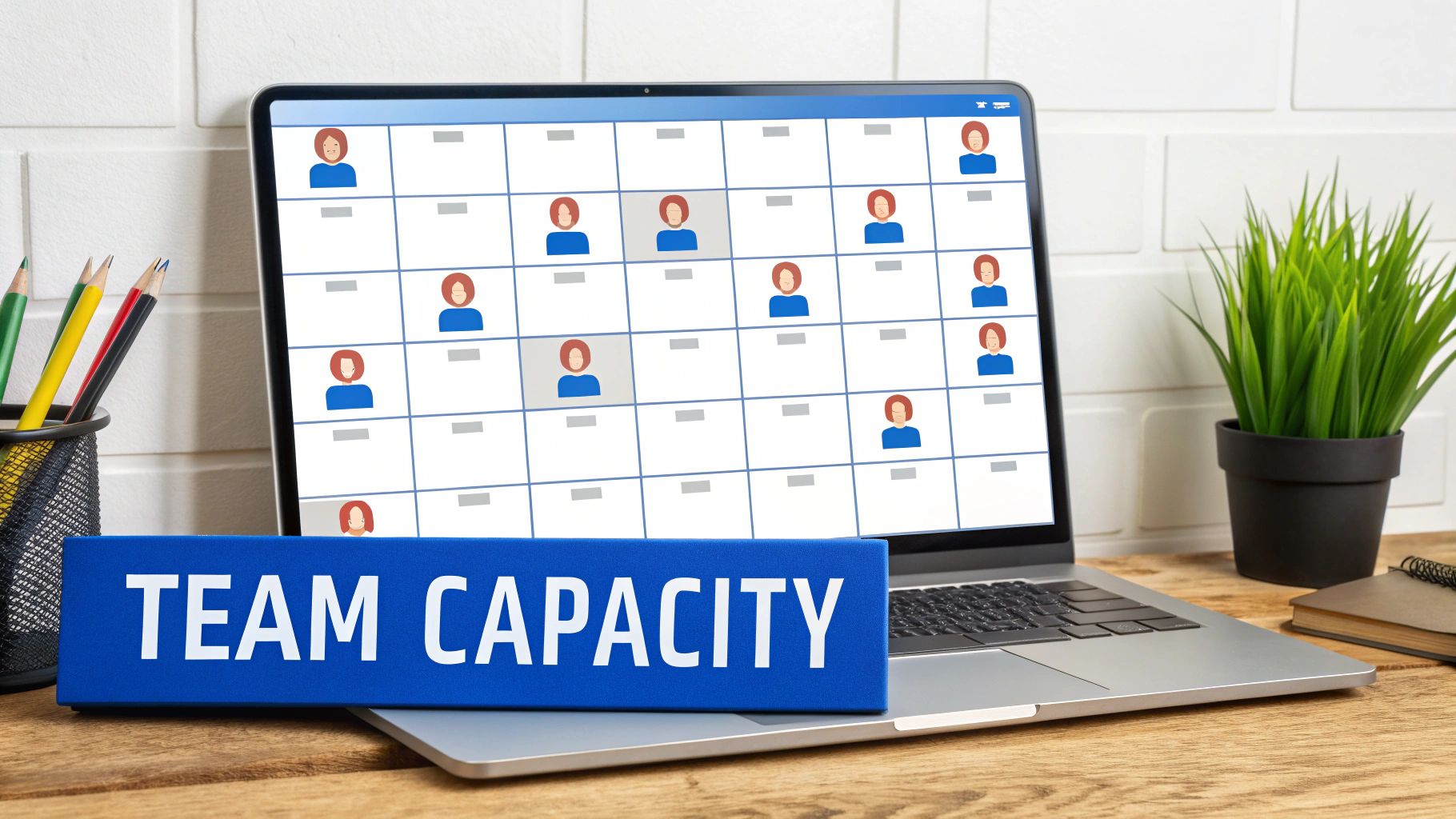
This approach involves forecasting resource needs based on the sales pipeline and mapping them against current staff availability. It provides a clear view of who is available to take on new work, who is at risk of being overloaded, and when you might need to hire or bring in contractors. For example, a consulting engineering firm can use this plan to see that their junior engineers are scheduled for 100% billable work for the next six weeks, leaving no time for training or proposal support. This visibility allows managers to rebalance workloads or bring in temporary help. The core benefit is sustainability: it protects your most valuable asset, your people, while ensuring high-quality project delivery.
Strategic Insight: By forecasting capacity needs against your sales pipeline, you can make informed hiring and contracting decisions well in advance. This transforms resource management from a reactive fire-drill into a strategic growth enabler.
Use a capacity dashboard to get a real-time, visual overview of who is overbooked and who has availability, allowing for quick and informed staffing decisions. Set clear billable utilization targets for different roles (e.g., designers at 75%, project managers at 85%) and monitor progress weekly. Hold regular resource planning meetings to align your hiring strategy with long-term growth forecasts, ensuring you have the right team in place when new projects kick off.
4. Multi-Phase Project Delivery Plan. For large-scale consulting engagements or complex creative projects, a multi-phase project delivery plan is an indispensable tool. This example of a work plan divides a massive undertaking into distinct, sequential phases like “Discovery,” “Design,” “Development,” and “Implementation.” Each phase functions as a mini-project with its own scope, deliverables, and success criteria, reducing overall project risk and allowing for strategic adjustments along the way.
This approach provides structure and control by creating clear handoff points and formal “gates” between stages. Before moving from “Discovery” to “Design,” for instance, the team must meet predefined exit criteria, such as client sign-off on the project brief. Imagine a digital agency executing a website redesign. They might use phases for strategy, wireframing, UI design, development, and launch. Completing the wireframing phase and getting client approval is mandatory before any visual design begins, ensuring the foundational work is solid. The primary benefit is risk mitigation: it breaks down overwhelming complexity into manageable, sequential steps, making it easier to control quality and budget.
Strategic Insight: Structuring projects in phases allows for flexible budgeting and billing. You can invoice clients upon the successful completion of each milestone, improving cash flow and demonstrating tangible progress at every step.
Before the project starts, clearly document what “done” looks like for each phase. This could be a client-approved deliverable, a technical benchmark, or a formal sign-off. Appoint a specific team member to be responsible for the quality and timely completion of each phase’s deliverables, ensuring clear ownership. Build brief reflection periods between phases. Use these meetings to capture key learnings and apply them to optimize the approach for the next stages of the project.
Client and Team-Focused Plans
Not every project is best served by a rigid, linear plan. These two models put people, whether clients or your own team, at the center of the planning process.
5. Client-Centric Service Delivery Plan. A client-centric service delivery plan flips the traditional work plan on its head by prioritizing client outcomes over internal processes. This example of a work plan is structured around a client’s specific business goals and satisfaction metrics, making it a must-have for advisory, strategy, and creative firms where success is often measured by intangible value rather than just completing tasks. It aligns every project activity directly with delivering measurable client impact.
This approach begins by deeply understanding the client’s objectives during a discovery phase, defining success with tangible KPIs like revenue growth, cost reduction, or improved market share. All subsequent tasks, milestones, and deliverables are then explicitly mapped to these goals. For instance, a marketing agency might tie a “Content Campaign” milestone not just to the delivery of blog posts, but to a client KPI of a “20% increase in qualified leads.” Similarly, a business consultant structures their engagement around improving a client’s “operational efficiency by 15%.” The key benefit is alignment: it guarantees that both your team and your client share the same definition of success.
Strategic Insight: By framing the work plan around client KPIs, firms can shift conversations from “what we did” to “what we achieved for you.” This strengthens client relationships, justifies project value, and provides a clear basis for demonstrating ROI.
Involve the client in a discovery workshop to collaboratively define and document success criteria, constraints, and key objectives before any work begins. Create a formal communication plan outlining the frequency, format, and stakeholders for progress reviews to ensure consistent alignment. Use project management tools to link specific tasks and milestones directly to the client’s stated objectives, making it easy to track and report on value creation.
6. Agile/Iterative Work Plan with Sprint Cycles. An agile or iterative work plan is a dynamic approach that breaks down large projects into short, focused work cycles called “sprints.” This example of a work plan is perfect for projects where requirements are expected to evolve, such as in software development, marketing campaigns, or creative design. Instead of a rigid, long-term plan, this method emphasizes flexibility, continuous feedback, and incremental progress.
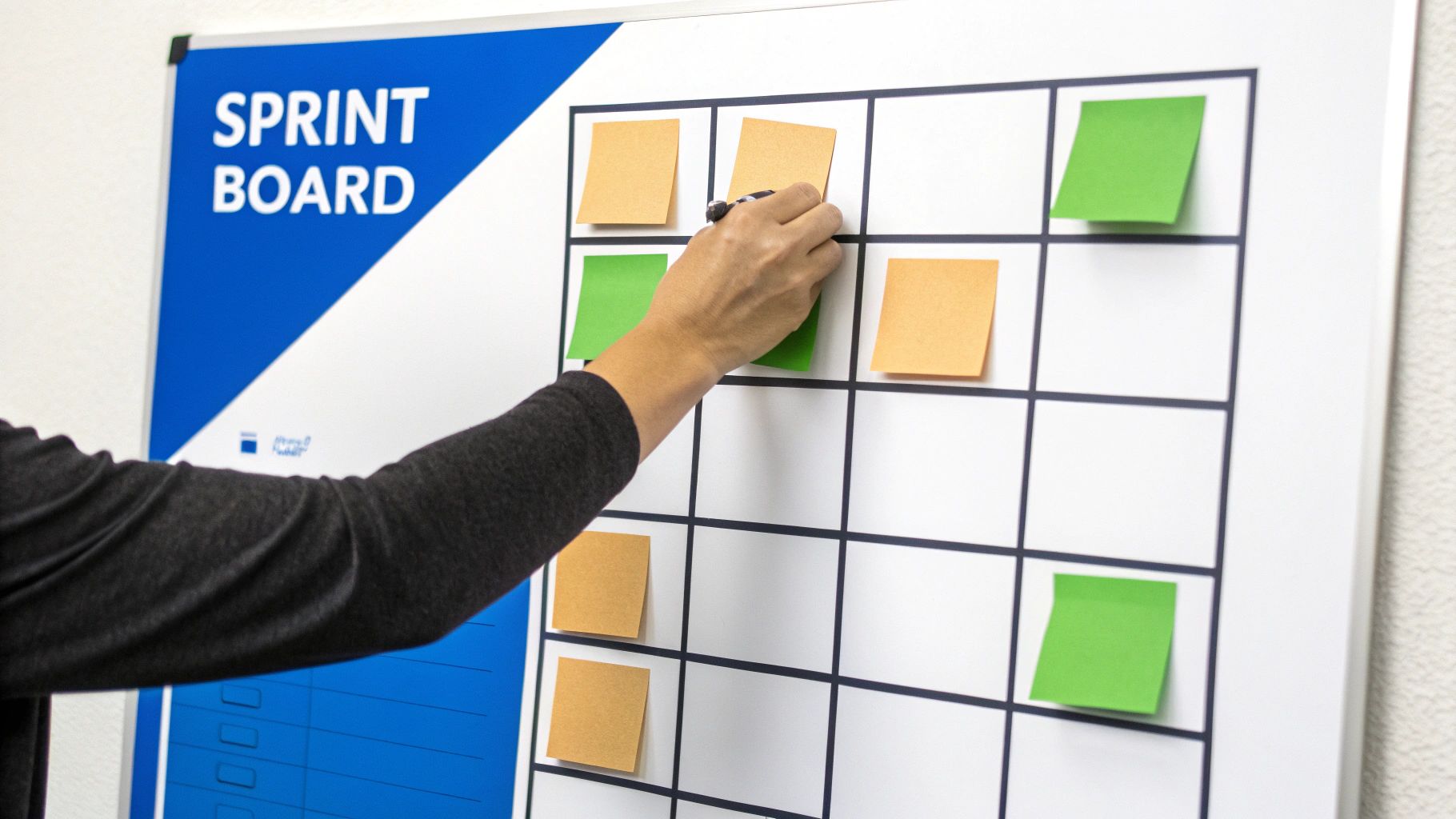
This approach organizes work into sprints, typically lasting one to two weeks, each with a specific goal. At the start of each sprint, the team selects a batch of tasks from a prioritized backlog. At the end, they deliver a tangible piece of work and hold a review session with stakeholders to gather feedback, which then informs the plan for the next sprint. For example, a creative agency building a new brand identity might use a two-week sprint to develop three initial logo concepts. After the sprint, they present these to the client. The client’s feedback (“We love concept B, but can we see it in a different color?”) directly influences the tasks for the next sprint. The primary benefit is adaptability: it allows teams to respond to change quickly without derailing the entire project.
Strategic Insight: By tracking velocity (the amount of work completed per sprint), agencies can accurately predict future capacity and provide clients with more reliable timelines for upcoming features or deliverables. This data-driven forecasting builds client trust and improves project planning.
Before each sprint begins, establish a clear, achievable objective (e.g., “Deliver a functional contact form”). This keeps the team focused and ensures everyone knows what success looks like for that cycle. Visualize your sprint backlog, in-progress tasks, and completed items on a task board to create transparency and help the team quickly spot and solve any bottlenecks. Schedule regular sprint review meetings with clients to formalize the feedback process and ensure adjustments are made early and often. Use project management software to monitor how many tasks or hours your team completes each sprint, as this metric is invaluable for improving future estimates and managing workload effectively.
Risk and Financial Performance Plans
The final pair of work plans address two concerns that keep firm leaders up at night: unexpected disruptions and margin erosion. These models build structured defenses against both.
7. Risk & Change Management Work Plan. A risk and change management work plan is a proactive framework designed to systematically identify, assess, and mitigate potential disruptions throughout a project’s lifecycle. This dynamic example of a work plan is essential for any firm where unforeseen challenges and client-driven changes can derail timelines and erode profitability. It ensures everyone is prepared for potential issues and that any adjustments to scope or budget are managed through a structured, transparent process.
This approach begins at project kickoff with a formal risk identification workshop, where the team brainstorms potential threats ranging from regulatory hurdles to resource constraints. Each risk is documented, assigned an owner, and given a mitigation strategy. Simultaneously, a formal change request process is established, requiring any proposed scope modification to be documented with its impact on budget, schedule, and resources before approval. For instance, an engineering firm on a large infrastructure project can use this plan to preemptively address potential permitting delays. A marketing agency can manage frequent client requests for creative changes without impacting the launch date. The core benefit is control: it transforms reactive problem-solving into a proactive strategy for maintaining project stability and client trust.
Strategic Insight: By formalizing the change management process, firms can clearly communicate the financial and timeline impacts of new requests. This turns potential scope creep into a documented, approved, and billable change order, protecting your project margins.
Conduct a kick-off risk workshop to identify and document potential risks, mitigation strategies, and assigned owners before the project gains momentum. Create a standardized change request template that outlines the justification, impact analysis (on scope, cost, schedule), and required approvals. Dedicate a portion of your regular status meetings to review the risk register, discuss emerging threats, and track the progress of mitigation actions.
8. Financial Performance & Profitability Work Plan. A financial performance and profitability work plan is a data-driven framework designed to monitor and optimize project and firm profitability during execution. This example of a work plan shifts the focus from just completing tasks to ensuring that every project contributes positively to the bottom line. It meticulously tracks actual costs like labor and expenses against the budget, monitors billable realization rates, and identifies financial trends to improve future business decisions.
This approach begins by establishing a detailed budget at the project’s outset, breaking down estimated labor hours by role and accounting for all direct costs. As the project progresses, actual time and expenses are tracked against this baseline, providing a real-time view of financial health. This method moves beyond simple task completion to actively manage a project’s financial pulse. For instance, a consulting firm can analyze profitability by service line, identifying that their “Data Analytics” projects have a 45% margin while “Strategy Workshops” have a 25% margin. This insight helps them focus sales efforts and resource allocation where it counts. The core benefit is financial control: it turns project management into a strategic tool for financial optimization.
Strategic Insight: By continuously monitoring profitability metrics, firms can make proactive adjustments to scope, resources, or pricing mid-project. This prevents margin erosion and transforms project delivery from a cost center into a predictable profit driver.
Establish profitability goals for each service line or project type and measure actual performance against these targets monthly to stay on track. After a project concludes, compare the estimated versus actual costs and margins, and use these insights to refine your estimation and pricing models for future proposals. Connect your project management tool with your accounting software to ensure project actuals are reconciled with your financial records automatically. You can learn more about how to connect project management and accounting to gain a single source of truth for firm performance.
Bringing It All Together: Your Next Steps
| Plan | Implementation Complexity 🔄 | Resource Requirements ⚡ | Expected Outcomes 📊 | Ideal Use Cases 💡 | Key Advantages ⭐ |
|---|---|---|---|---|---|
| Project-Based Work Plan (Time & Resource Allocation) | Medium 🔄🔄 — set up for phases, tracking | Medium ⚡⚡ — time tracking + integrations | Accurate project costing, real-time profitability 📊 — ⭐⭐ | Hourly/phase-billed consulting, architecture, agencies 💡 | Precise billing & visibility; prevents over-allocation ⭐ |
| Proposal-to-Invoice Workflow Plan | High 🔄🔄🔄 — cross-team process alignment | Medium ⚡⚡ — CRM + proposal + invoicing tools | Faster cash conversion; unified engagement data 📊 — ⭐⭐⭐ | Firms needing end-to-end sales-to-delivery automation 💡 | Eliminates silos; speeds invoicing and reconciliation ⭐ |
| Resource Capacity & Workload Balancing Plan | Medium 🔄🔄 — forecasting + monitoring | Medium-High ⚡⚡⚡ — capacity tools, regular updates | Improved utilization; reduced burnout risk 📊 — ⭐⭐ | Teams with utilization targets, growing pipelines 💡 | Prevents bottlenecks; improves retention and forecasting ⭐ |
| Multi-Phase Project Delivery Plan | Medium-High 🔄🔄🔄 — phase gating & handoffs | Medium ⚡⚡ — phase leads, milestone tracking | Reduced risk; phased validation and cash flow control 📊 — ⭐⭐ | Large, complex projects (infrastructure, design) 💡 | Staged risk reduction; phase-based budget control ⭐ |
| Client-Centric Service Delivery Plan | Medium 🔄🔄 — discovery + alignment up front | Low-Medium ⚡⚡ — stakeholder engagement time | Higher client satisfaction and retention 📊 — ⭐⭐⭐ | Advisory, strategy, and outcome-focused engagements 💡 | Aligns delivery to client value; enables upsell ⭐ |
| Agile / Iterative Work Plan (Sprints) | Medium 🔄🔄 — sprint cadence & backlog discipline | Medium ⚡⚡ — frequent client reviews, board tooling | Incremental value delivery; fast feedback loops 📊 — ⭐⭐⭐ | Digital agencies, product teams, creative studios 💡 | Flexible to change; reduces waste with early validation ⭐ |
| Risk & Change Management Work Plan | Medium 🔄🔄 — risk registers and approvals | Low-Medium ⚡⚡ — templates and review cadence | Fewer escalations; controlled scope/budget changes 📊 — ⭐⭐ | Regulated projects; high-change client environments 💡 | Protects schedule/budget; provides audit trail ⭐ |
| Financial Performance & Profitability Plan | High 🔄🔄🔄 — detailed budgets & variance analysis | Medium-High ⚡⚡⚡ — accounting integration, accurate time entry | Clear margin insights; pricing and estimation improvements 📊 — ⭐⭐⭐ | Firms focused on margin optimization and pricing strategy 💡 | Early detection of unprofitable work; data-driven pricing ⭐ |
Throughout this guide, we’ve explored eight distinct work plan models, each designed to solve specific challenges faced by professional service firms. From the detailed Multi-Phase Project Delivery Plan essential for architects, to the dynamic Agile/Iterative Work Plan favored by marketing agencies, a clear pattern emerges: a well-structured plan is the bedrock of successful project execution. The goal isn’t just to list tasks; it’s to create a strategic roadmap that aligns your team, manages client expectations, and safeguards your firm’s profitability.
The most powerful takeaway is that the perfect work plan isn’t a rigid, one-size-fits-all document. It’s a dynamic, adaptable framework. The best example of a work plan is one that evolves with your project, providing clarity amid complexity. As we saw in the Financial Performance & Profitability Work Plan, connecting your project tasks directly to your budget isn’t just good practice; it’s essential for sustainable growth. Similarly, the Resource Capacity & Workload Balancing Plan shows that a project’s success is deeply connected to your team’s well-being and availability.
So, how do you translate these examples into tangible results for your firm? The key is to move from passive reading to active implementation.
- Select and Adapt: Identify the one or two work plan examples that most closely mirror your firm’s current challenges. Are you struggling with scope creep? Start with the Client-Centric Service Delivery Plan. Is team burnout a concern? Focus on the Resource Capacity Plan.
- Customize Your Core Components: Use the detailed breakdowns (objectives, milestones, risks, etc.) from our examples as a checklist. Customize each section to fit a real, upcoming project. This hands-on application is where the real value lies.
- Integrate with Your Tools: A plan is only as good as its execution. Manually tracking progress against these detailed plans in spreadsheets is a recipe for frustration. The real advantage comes from integrating your plan into a unified platform where tasks, time tracking, and budgets live together.
By adopting these principles, you transform the work plan from a static document into a living blueprint for success. You are no longer just managing projects; you are building a predictable, scalable, and highly professional operation. This strategic approach ensures every hour billed and every milestone achieved contributes directly to your firm’s bottom line and stellar reputation.
Ready to turn these powerful work plan examples into your firm's new reality?
Drum is the all-in-one platform designed for professional services, connecting your project plans with time tracking, resource management, and financial reporting.
Stop juggling spreadsheets and start executing flawlessly by visiting Drum to see how you can build a more profitable and predictable business.